Header

Mrs. King at Home About Mrs. King Contact Mrs. King Mrs. King's Music Class HOME Image Map
Showing posts with label kindergarten. Show all posts

Music Lesson Ideas for Quiet Days

Music lesson plans for days when you need to be as quiet as possible.  These quiet activities include ways to teach pitch, rhythm, composers and more in a quiet music classroom.

"You want me to teach music QUIETLY?" I said in disbelief.  "Is that even possible?"

It was testing season and I was fortunate to have my schedule only moderately rearranged.  The problem?  I had to teach music as quietly as possible.  I laugh thinking about how dumbfounded I was at the very idea.  Now with quite a few testing seasons under my belt I have a few suggestions for how to teach musical lesson in quiet ways.  Read on, but shhhh! Let's keep it down.

Pitch

Music lesson plans for days when you need to be as quiet as possible.  These quiet activities include ways to teach pitch, rhythm, composers and more in a quiet music classroom.
One of my favorite quiet activities for teaching pitch is to use my bottle cap staff sheets.  I have them laminated and use them for a variety of lesson.  For this lesson I pass out the sheets and a hand full of bottle caps.  I will say a word that can be spelled on the staff and students "write" it by putting their bottle caps in order.  In the picture, we just spelled "cafe".
Although the staff sheets are easy enough to make, I have a whole set of the staves and word cards in my store that you maybe interested in:  Bottle Cap Staff

 Rhythm

Music lesson plans for days when you need to be as quiet as possible.  These quiet activities include ways to teach pitch, rhythm, composers and more in a quiet music classroom.
 There are many ways to work on rhythm quietly.  Consider using chopsticks instead of rhythm sticks to play on the back of chairs or even on the floor.  The sound is light and intriguing for even 6th graders.
Another great quiet drumming activity (I know...quiet drumming?) is to use drum sticks on  foam garden kneeling pads.  I found purple and blue ones at Dollar Tree and LOVE that kids can really beat on them, but they sound delightfully muted.  :-)
Music lesson plans for days when you need to be as quiet as possible.  These quiet activities include ways to teach pitch, rhythm, composers and more in a quiet music classroom.

Rhythmic dictation is a pretty quiet activity too.  I use dry erase boards or lap packs (staff paper or blank paper stuffed into a page protector) and dry erase markers.  You might consider using craft sticks, rhythm cards, mini erasers (matching the syllables in the name of the eraser to the number of sounds in the rhythm) and more.  Clap or tap the rhythms on an instrument, students echo and then write it down.  It is a great assessment and requires great listening skills.

Instead of writing the rhythms down, you might consider having students listen to the rhythm that you play and then circling the correct notation from a few examples.  I have an entire set of "What Do You Hear" worksheets that ask students to do just that.  They vary in complexity so you can use the set with multiple grade levels.  Click HERE to learn more.
Music lesson plans for days when you need to be as quiet as possible.  These quiet activities include ways to teach pitch, rhythm, composers and more in a quiet music classroom.

 Composer Studies

Music lesson plans for days when you need to be as quiet as possible.  These quiet activities include ways to teach pitch, rhythm, composers and more in a quiet music classroom.
If you are able to show videos, I highly recommend the Composer Series of movies about the lives of famous composers.  (not an affiliate link)  You probably already have these in your classroom.  

In addition to showing composer videos, you might consider planning time for your students to just listen to, read about and color pictures of popular composers.  I've talked about this kind of thing in a previous blog post: Coloring Composers.  You can get the set that I use HERE.

I also LOVE Jena Hudson's composer flip books.  You can find them in her store, Sew Much Music on TpT, or follow this link to try the American Composers Set for free!  

 Listening

Music lesson plans for days when you need to be as quiet as possible.  These quiet activities include ways to teach pitch, rhythm, composers and more in a quiet music classroom.

Another quiet, creative activity is listening and responding.  Choose a piece of music that inspires a story or vivid mental images.  Have students listen the first time.  For wiggly classes you may want to have them lightly tap the beat or follow you as you tap the beat in various ways.  
Next, have students lie down (if possible), close their eyes and imagine what kind of story the composer wanted them to "see" in the music.
Pass out blank pieces of paper and have them illustrate what they have heard.  For K-2, I often use THIS set of writing prompts that already have a few words written and blank writing lines.

A few of my favorite pieces to use are:
"Moonlight Sonata" by Beethoven (Be prepared!  This one sometimes brings pictures of pets that have passed away!)
"Bugler's Holiday" by Anderson
"Stars and Stripes Forever" by Sousa (Shh! You might want to turn this one down a little!)
"Ballet of the Unhatched Chicks" by Mussorgsky
"Funeral March of a Marionette" by Gounod
"Minute Waltz" by Chopin
"Hungarian Dance No. 5" by Brahms

 Instruments of the Orchestra


If you are able to show videos, I highly recommend the Instrumental Classmates set of videos to introduce the instrument families.  I found my set on Amazon.  Quaver also has a great series of videos about instruments that your students will enjoy.  

If you are unable to show a video, your students might enjoy putting together a book of instruments.  Students can color the instruments, copy their name or add information about the instrument (with the add-on sheets included).  Click the picture above to get the full set of instrument families or click HERE to get the sampler for free.  Although this takes some time to make all of the copies you'll need, it is a great activity for a quiet day in music.

Another great quiet day activity is to read the book "The Remarkable Farkle McBride".  My 5th graders enjoy this story, so I can use this lesson with all of my classes.  At the end of the story, we will review instrument families and I'll pass out these simple coloring sheets.  While students are coloring we will listen to my classical music playlist for some quiet background music.

 Quiet Games

Music lesson plans for days when you need to be as quiet as possible.  These quiet activities include ways to teach pitch, rhythm, composers and more in a quiet music classroom.
Quiet games are not usually favorites in my classroom, but over the years I've come up with a few that students will give a reluctant thumbs up.  They would much rather be drumming and dancing and singing, but quiet days don't always allow for that.

Telephone - This traditional game is played by having students sit in a circle and whispering a message to each other until it makes it all the way around the circle.  Hilarity ensues when the message at the end sounds nothing like the message that started.  The same idea can work with rhythms.  Have students tap a 4 beat measure on the back of the person next to them and then pass that around the group.  Students can usually master this in a couple of tries so then we make it a bit more difficult.  Instead of sending one rhythm around in one direction, start two rhythms.  One goes to the left and the other to the right and they all end up back at the same person.  Tricky!

Roll and Cover is a game for small groups.  Students take turns rolling the dice.  The key on each page says a note or rest name.  Students then find that symbol in the picture and color one piece of the picture.  Taking turns, play goes around the circle until someone has every piece colored.  It is a nice way to review notes and clefs.  You can find Roll and Cover sets in my store.  Any normal die will work, but I always try to get the large foam dice to use because they are so much more fun!

I hope that you are never asked to teach music quietly, but if you are I hope that some of these ideas will prove helpful.  Like these ideas?  PIN THEM for later.

Music lesson plans for days when you need to be as quiet as possible.  These quiet activities include ways to teach pitch, rhythm, composers and more in a quiet music classroom. 


post signature

Books You Need in Your Music Classroom - PRIMARY LIST

Books in the music classroom can be used for singing, dancing, composing, history and more! Check out this huge list of children's literature that should be on the shelves of your music classroom.

In my music education college classes, way back in the day, it never occurred to me to invest in children's books for my music classroom.  I guess that it never occurred to my instructors either because I didn't hear about it until a few years into my teaching career.  It sounds crazy doesn't it? 

There are so many amazing pieces of children's literature that lend themselves to teaching musical concepts and enhance lessons in history, movement, composition and more.  This is a list of some of the books that I like using with Preschool through 2nd grades.  This list is in no way complete, but hopefully it will provide you with inspiration when shopping for your classroom.

If you are interested in my list of books for upper elementary, you'll want to check out THIS post with a long list of books that I keep for 3rd through 6th graders.

Add Sound Effects
Polar Bear, Polar Bear What Do You Hear? Bill Martin Jr.
Caps for Sale Esphyr Slobodkina
Goodnight Moon by Margaret Wise Brown 
The Little Old Lady Who Wasn't Afraid of Anything Linda Williams
The Napping House Audrey and Don Wood
Tiptoe Joe  Ginger Foglesong Gibson
This is the House That Jack Built  Simms Taback
Where the Wild Things Are Maurice Sendak
Alexander and the Terrible, Horrible, No Good Very Bad Day Judith Viorst
In the Tall, Tall Grass Denise Fleming
Mortimer  Robert Munsch

Great for vocal exploration or incorporating classroom instruments, this list of books is just a few of the books that work well for adding instruments.  Each book uses a repetitive and sometimes cumulative format that makes it easy for students to follow along.
Looking for an easy way to get started with this kind of activity?  Start with This is the House That Jack Built.  At the beginning of the book, there is a cast list.  Have your students brainstorm sounds they can make that would represent each character.  Next, read the book adding those sound effects.  So much fun!
Books in the music classroom can be used for singing, dancing, composing, history and more! Check out this huge list of children's literature that should be on the shelves of your music classroom.

Instruments

Berlioz the Bear Jan Brett
Carnival of the Animals John Lithgow
Dan, The Taxi Man  Eric Ode
Never Play Music Right Next to the Zoo John Lithgow
The Remarkable Farkle McBride John Lithgow
Tubby the Tuba Paul Tripp
Zin! Zin! Zin! A Violin Lloyd Moss

In my classroom, we don't really plunge into naming instruments and classifying instruments by family until 3rd grade. That being said, we learn about individual instruments and classroom instruments in K-2.  In addition to identifying instruments in pieces we listen to, exploring the music of Peter and the Wolf and Carnival of the animals, I like to use these books about instruments in class.

Books in the music classroom can be used for singing, dancing, composing, history and more! Check out this huge list of children's literature that should be on the shelves of your music classroom.

Rhyming Books for Rhythm Work
Chicka Chicka Boom Boom Bill Martin Jr.
Commotion in the Ocean Giles Andreae
Farmer Joe and the Music Show Tony Mitton
'Possum Come a-Knockin' by Nancy Van Laan
Moo Bah La La La by Sandra Boynton
Goodnight, Goodnight, Construction Site by Sherri Duskey Rinker
Room on the Broom by Julia Donaldson
Llama Llama Red Pajama  by Anna Dewdney

There are thousands of rhyming books that have strong rhythm and repetition and work well for rhythm work.  I've listed just a few and know that you probably have several books in your library that aren't on this list.

With rhyming books, I often read them and have students keep the steady beat by patting or with non-pitched percussion instruments.  You could have them isolate rhythms from the book and decipher their rhythm, play them on Orff instruments, create body percussion sections and more.

Max Found Two Sticks by Brian Pinkney is great for rhythm work too, but isn't a strong rhyming book.  I pass out drumsticks (or chop sticks!) and have students echo the drumming phrases in this book.  This is a fun way to introduce this great book to a class.

Movement
My Many Colored Days Dr. Suess
What a Wonderful World Theile and Weiss
My Many Colored Days and What a Wonderful World are excellent books for adding movement with scarves and ribbons.  Read the book, assign students a color or another key word in the story.  When students hear that word or phrase, they move with their scarf.  I use the Louis Armstrong version of "What a Wonderful World" to play while we move too.

Giraffe's Can't Dance by Giles Andreae is such a delightful rhyming book!  I love to cue up music to match the specific genres mentioned in the book and play it on our second reading.  I challenge students to dance in the same style too.

We're Going on a Bear Hunt by Michael J. Rosen is a great way to introduce the Bear Hunt activity most music teachers use in music class.  I also like to keep this in my library so students can read and move during center time.
Books in the music classroom can be used for singing, dancing, composing, history and more! Check out this huge list of children's literature that should be on the shelves of your music classroom.
 Sing the Book
Baa Baa Black Sheep Iza Trapani
Brown Bear, Brown Bear, What Do You See? Bill Martin Jr.
Cat Goes Fiddle-I-Fee Paul Gaidone
Coat of Many Colors  Dolly Parton
Don't Laugh at Me Steve Seskin and Allen Shamblin
Five Green and Speckled Frogs  Priscilla Burris
Footloose Kenny Loggins
Grandma's Feather Bed John Denver
Groovy Joe Ice Cream and Dinosaurs Eric Litwin and Tom Lichtenheld
He's Got the Whole World in His Hands  Kadir Nelson
How Much is that Doggie in the Window Iza Trapani
Hush Little Baby Brian Pinkney
I Ain't Gonna Paint No More Karen Beaumont
I'm a Little Teapot Iza Trapani
Itsy Bitsy Spider Iza Trapani
Jennie Jenkins John Feierabend
Mary Had a Little Lamb Iza Trapani
My Favorite Things Renne Graef
Oh Where, Oh Where Has My Little Dog Gone? Iza Trapani
One Love Bob Marley
Pete the Cat and His Four Groovy Buttons Eric Litwin
Pete the Cat Rockin' in My School Shoes Eric Litwin
Row, Row, Row Your Boat Iza Trapani
Sing and Dance in Your Polka Dot Pants  Eric Litwin and Tom Lichtenheld
Sunshine on My Shoulders John Denver
Take Me Home, Country Roads John Denver
The Seals on the Bus Lenny Hort
This Land is Your Land Woody Guthrie
Twinkle, Twinkle Little Star Iza Trapani
What Does the Fox Say Svein Nyhus
Wheels on the Bus Raffi

Books in the music classroom can be used for singing, dancing, composing, history and more! Check out this huge list of children's literature that should be on the shelves of your music classroom.

Miscellaneous
Introduction to Opera
Chalk Bill Thomson
This book is pictures only and makes the perfect introduction to opera!  I explain to students that an opera is a play that is sung, not spoken.  Then I sing questions and they sing their answers before we "read" this book.  I sing what I think is happening on the first few pages and then invite students to take over the story in the same way.  It is so fun to hear their creative improvisations!

Vocalizations
How to Speak Moo Deborah Fajerman
So fun for vocal warm ups, this book has students "mooing" in all sorts of ways!

Dynamics
Harold Finds a Voice Courtney Diemas
Ruby Sings the Blues Niki Daly
Looking for a great way to introduce dynamics to your primary learners?  These books are perfect!

Let me know what books you love to use with your primary students in the comments or on Facebook.  If you liked this list PIN IT for later!
Books in the music classroom can be used for singing, dancing, composing, history and more! Check out this huge list of children's literature that should be on the shelves of your music classroom.
post signature

Princesses Don't Do Math - Number Mats for a Reluctant Learner

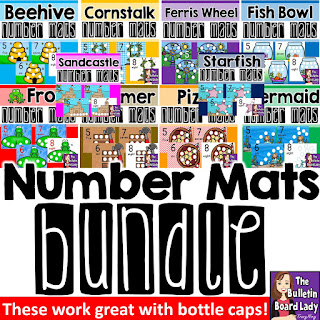
Princesses Don’t Do Math – Number Mat Ideas for a Reluctant Learner.  You’ll love these number mat ideas for getting your reluctant preschooler playing, counting and adding their way to success.  Number mats are great for developing number sense and these mats work with bottle caps!  They can work with playdough, rocks, and more but I think you’ll like how perfectly the bottle caps can work with any theme.  Great for preschool and kindergarten aged students in workstations or at home.

Welcome to a new segment on my blog.  As a busy wife and mom, I've decided to share some stories from my crazy and wonderful home life.  Crafting, recipes (that I don't ruin!), parenting and loving the one you are with will all be features of MrsKing@Home.  I'll also be sharing activities that I've created for my kids to further their education and some that are just for fun!  Eventually, you'll be able to see all of these posts by clicking on Mrs. King @ Home right under the page header.

My daughter, a bright and sassy 4 year old, lives in a world of princess, mermaids, rainbows and unicorns.  With her rich imagination she is always playing pretend or performing for us in some dramatic fashion.  Last week, I thought that we should spend a little time working on recognizing numbers.  Unfortunately, she disagreed.
"Noooo!" she whined.  "Princesses don't do math!"

When I stopped laughing, it occurred to me that I needed to make this time just a little more fun for both of us.  Thus, the bottle cap number mats were born!  If you are a regular reader of my blog, you know that I love recycling bottle caps to use in the classroom.  I use them for a bottle cap staff and have used them in a dip tray workstation too.  Since I just happened to have a big stash of these, they made the perfect muse for my hands-on number mats.

Princesses Don’t Do Math – Number Mat Ideas for a Reluctant Learner.  You’ll love these number mat ideas for getting your reluctant preschooler playing, counting and adding their way to success.  Number mats are great for developing number sense and these mats work with bottle caps!  They can work with playdough, rocks, and more but I think you’ll like how perfectly the bottle caps can work with any theme.  Great for preschool and kindergarten aged students in workstations or at home.

I collected many of the caps myself, but I also enlisted parents to help me as well.  It didn't take long before I had more than enough caps for all the projects I would ever need!  I put them all in the sink with hot, sudsy water and sloshed them around.  (Yes, "sloshed" is the technical term.)  I laid them out on a towel to dry and they were ready to go.

Princesses Don’t Do Math – Number Mat Ideas for a Reluctant Learner.  You’ll love these number mat ideas for getting your reluctant preschooler playing, counting and adding their way to success.  Number mats are great for developing number sense and these mats work with bottle caps!  They can work with playdough, rocks, and more but I think you’ll like how perfectly the bottle caps can work with any theme.  Great for preschool and kindergarten aged students in workstations or at home.
Here's what they look like in action.   These are cleaned bottle caps in a variety of colors.  I had a few parents turn in lids from larger bottles and from milk jugs.  I've got them stashed somewhere for another project, but for the number mats I really wanted to use just bottle caps.  This Ferris wheel set is one of my daughter's favorites.  It is second only to the the mermaid set.
Princesses Don’t Do Math – Number Mat Ideas for a Reluctant Learner.  You’ll love these number mat ideas for getting your reluctant preschooler playing, counting and adding their way to success.  Number mats are great for developing number sense and these mats work with bottle caps!  They can work with playdough, rocks, and more but I think you’ll like how perfectly the bottle caps can work with any theme.  Great for preschool and kindergarten aged students in workstations or at home.

Each of the sets contains mats for 1-10.  I printed off the full color versions, but in the sets that I've posted in my store there are four versions.  In addition to the full color version with the little circles to show placement of the bottle caps, there's one with an ink saving background.  There are also versions without the circles in full color and with the ink saving version.

Princesses Don’t Do Math – Number Mat Ideas for a Reluctant Learner.  You’ll love these number mat ideas for getting your reluctant preschooler playing, counting and adding their way to success.  Number mats are great for developing number sense and these mats work with bottle caps!  They can work with playdough, rocks, and more but I think you’ll like how perfectly the bottle caps can work with any theme.  Great for preschool and kindergarten aged students in workstations or at home.


For the hammer and nail version I painted the tops of some gray bottle caps and added "ones and X's" as my daughter described them.  When we worked with this set we used a little plastic hammer to smack them as we counted them.
Princesses Don’t Do Math – Number Mat Ideas for a Reluctant Learner.  You’ll love these number mat ideas for getting your reluctant preschooler playing, counting and adding their way to success.  Number mats are great for developing number sense and these mats work with bottle caps!  They can work with playdough, rocks, and more but I think you’ll like how perfectly the bottle caps can work with any theme.  Great for preschool and kindergarten aged students in workstations or at home.

Princesses Don’t Do Math – Number Mat Ideas for a Reluctant Learner.  You’ll love these number mat ideas for getting your reluctant preschooler playing, counting and adding their way to success.  Number mats are great for developing number sense and these mats work with bottle caps!  They can work with playdough, rocks, and more but I think you’ll like how perfectly the bottle caps can work with any theme.  Great for preschool and kindergarten aged students in workstations or at home.
Our favorite bottle caps were spray painted gold.  They work great for the sandcastle set and would be awesome for the treasure chest and piggy bank versions I'm working on.

Princesses Don’t Do Math – Number Mat Ideas for a Reluctant Learner.  You’ll love these number mat ideas for getting your reluctant preschooler playing, counting and adding their way to success.  Number mats are great for developing number sense and these mats work with bottle caps!  They can work with playdough, rocks, and more but I think you’ll like how perfectly the bottle caps can work with any theme.  Great for preschool and kindergarten aged students in workstations or at home.

We painted the yellow bottle caps to look like corn cobs.  These were a little trickier to do!  We added the lines with a permanent marker and they look great with the cornstalk set.

Princesses Don’t Do Math – Number Mat Ideas for a Reluctant Learner.  You’ll love these number mat ideas for getting your reluctant preschooler playing, counting and adding their way to success.  Number mats are great for developing number sense and these mats work with bottle caps!  They can work with playdough, rocks, and more but I think you’ll like how perfectly the bottle caps can work with any theme.  Great for preschool and kindergarten aged students in workstations or at home.

Princesses Don’t Do Math – Number Mat Ideas for a Reluctant Learner.  You’ll love these number mat ideas for getting your reluctant preschooler playing, counting and adding their way to success.  Number mats are great for developing number sense and these mats work with bottle caps!  They can work with playdough, rocks, and more but I think you’ll like how perfectly the bottle caps can work with any theme.  Great for preschool and kindergarten aged students in workstations or at home.
For the beehive set we decorated a few of the yellow bottle caps to look like bees.

Princesses Don’t Do Math – Number Mat Ideas for a Reluctant Learner.  You’ll love these number mat ideas for getting your reluctant preschooler playing, counting and adding their way to success.  Number mats are great for developing number sense and these mats work with bottle caps!  They can work with playdough, rocks, and more but I think you’ll like how perfectly the bottle caps can work with any theme.  Great for preschool and kindergarten aged students in workstations or at home.

As you can see in the picture above, the bottle caps aren't always the same height.  As long as the diameter is the same, they will match up with the circles on the number mats.  The fish bowl set would be fun to use with those shiny aquarium rocks too.

Princesses Don’t Do Math – Number Mat Ideas for a Reluctant Learner.  You’ll love these number mat ideas for getting your reluctant preschooler playing, counting and adding their way to success.  Number mats are great for developing number sense and these mats work with bottle caps!  They can work with playdough, rocks, and more but I think you’ll like how perfectly the bottle caps can work with any theme.  Great for preschool and kindergarten aged students in workstations or at home.

We did use the bottle caps for the pizza set, but we had been using play dough earlier, so we made play dough toppings for our pizza mats too.

Princesses Don’t Do Math – Number Mat Ideas for a Reluctant Learner.  You’ll love these number mat ideas for getting your reluctant preschooler playing, counting and adding their way to success.  Number mats are great for developing number sense and these mats work with bottle caps!  They can work with playdough, rocks, and more but I think you’ll like how perfectly the bottle caps can work with any theme.  Great for preschool and kindergarten aged students in workstations or at home.

The bottle caps work regardless of which side they are placed on as scene on the starfish.  Actually, I think they may look better upside down with this set.

Princesses Don’t Do Math – Number Mat Ideas for a Reluctant Learner.  You’ll love these number mat ideas for getting your reluctant preschooler playing, counting and adding their way to success.  Number mats are great for developing number sense and these mats work with bottle caps!  They can work with playdough, rocks, and more but I think you’ll like how perfectly the bottle caps can work with any theme.  Great for preschool and kindergarten aged students in workstations or at home.

Princesses Don’t Do Math – Number Mat Ideas for a Reluctant Learner.  You’ll love these number mat ideas for getting your reluctant preschooler playing, counting and adding their way to success.  Number mats are great for developing number sense and these mats work with bottle caps!  They can work with playdough, rocks, and more but I think you’ll like how perfectly the bottle caps can work with any theme.  Great for preschool and kindergarten aged students in workstations or at home.

The frog set was great fun!  We decorated a few of the caps with little flies.  We also used some of the plastic frogs and insect from the party store to count with this one.  In addition to counting with these number mats, we used #5 for "Five Green and Speckled Frogs".

In addition to counting with the mats and arranging them from high to low and vice versa, we've started using them for simple addition problems.  I'll lay out the mats for 1 and 5 and ask "How many all together?" and she can add them up and give me an answer.

You can download all of these mats (400 pages!) or individual sets here:
Princesses Don’t Do Math – Number Mat Ideas for a Reluctant Learner.  You’ll love these number mat ideas for getting your reluctant preschooler playing, counting and adding their way to success.  Number mats are great for developing number sense and these mats work with bottle caps!  They can work with playdough, rocks, and more but I think you’ll like how perfectly the bottle caps can work with any theme.  Great for preschool and kindergarten aged students in workstations or at home.

post signature
Like this idea?  Pin it!
Princesses Don’t Do Math – Number Mat Ideas for a Reluctant Learner.  You’ll love these number mat ideas for getting your reluctant preschooler playing, counting and adding their way to success.  Number mats are great for developing number sense and these mats work with bottle caps!  They can work with playdough, rocks, and more but I think you’ll like how perfectly the bottle caps can work with any theme.  Great for preschool and kindergarten aged students in workstations or at home.


Using Gloves with Fingerplays


Using Gloves with FIngerplays by Tracy King  Ideas for creating gloves for fingerplays for preschool, kindergarten and elementary aged kids.  Get crafty with these DIY manipulatives for fingerplays, rhymes and songs like “Itsy Bitsy Spider”, “Ten in the Bed” and more.  Use the finger play gloves to teach Bible lessons, spring time chants, counting…the ideas are limitless using these simple and inexpensive techniques.

A fingerplay is a short poem or rhyme that is either spoken or sung.  It involves the use of hands and fingers to act out the words of a song.  A great example is "The Itsy Bitsy Spider".  When singing the song, you use your hands to show the actions of the determined little spider.  Today I'm going to show you how to create some gloves that work great with fingerplays and won't break the bank!

Using Gloves with FIngerplays by Tracy King  Ideas for creating gloves for fingerplays for preschool, kindergarten and elementary aged kids.  Get crafty with these DIY manipulatives for fingerplays, rhymes and songs like “Itsy Bitsy Spider”, “Ten in the Bed” and more.  Use the finger play gloves to teach Bible lessons, spring time chants, counting…the ideas are limitless using these simple and inexpensive techniques.

First we are going to make a set of birdie gloves.  I have only used them for songs or rhymes that need 5 birdies, so a pair of gloves could be used to make 2 sets.  I picked up these colorful garden gloves at Dollar Tree.  Initially, my plan was to print 5 different birdies on card stock, laminate them and then attach them to the gloves.  Then I saw these adorable little birds not far from gloves and knew they would be perfect.  You can purchase these in bulk from their website and create enough for your entire class if you wanted.

Using Gloves with FIngerplays by Tracy King  Ideas for creating gloves for fingerplays for preschool, kindergarten and elementary aged kids.  Get crafty with these DIY manipulatives for fingerplays, rhymes and songs like “Itsy Bitsy Spider”, “Ten in the Bed” and more.  Use the finger play gloves to teach Bible lessons, spring time chants, counting…the ideas are limitless using these simple and inexpensive techniques.
Next I attached Velco dots to the fingertips of the gloves and the other part to the bottom of the birds.  There are two great reasons to use Velcro:
1.  The birdies can "fly away" by being pulled off, rather than just hidden.
2.  The gloves can be used for multiple sets of fingerplay characters.  This saves me money!  Yay!

Using Gloves with FIngerplays by Tracy King  Ideas for creating gloves for fingerplays for preschool, kindergarten and elementary aged kids.  Get crafty with these DIY manipulatives for fingerplays, rhymes and songs like “Itsy Bitsy Spider”, “Ten in the Bed” and more.  Use the finger play gloves to teach Bible lessons, spring time chants, counting…the ideas are limitless using these simple and inexpensive techniques.

This is what they look like when assembled.  Here are a few fingerplays to try with your new birdie friends:
The Birdie Family
(tune:  Finger Family)
Daddy birdie, daddy birdie, where are you?
Here I am!  Here I am!  How do you do?

Mommy birdie, mommy birdie, where are you?
Here I am!  Here I am!  How do you do?

Sister birdie, sister birdie, where are you?
Here I am!  Here I am!  How do you do?

Brother birdie, brother birdie, where are you?
Here I am!  Here I am!  How do you do?

Baby birdie, baby birdie, where are you?
Here I am!  Here I am!  How do you do?

Birdie family, birdie family, where are you?
Here we are!  Here we are! How do you do?

  
Five Feathered Birds
(fingerplay)
Five feathered birds sitting on the door;
One flew away and then there were four.
Four feathered birds singing in the tree,
One flew away and then there were three.
Three feathered birds looking at you,
One flew away and then there were two.
Two feathered birds sitting in the sun,
One flew away and then there was one.
One feathered bird looking like a hero,
He flew away and now there are zero!


There were Five in the Nest
(tune: Ten in the Bed)
There were five in the nest and the little one said
“Roll over!  Roll over!”
So they all rolled over and one flew out.
There were four in the nest and the little one said
“Roll over!  Roll over!”
So they all rolled over and one flew out.
There were three in the nest and the little one said
“Roll over!  Roll over!”
So they all rolled over and one flew out.
There were two in the nest and the little one said
“Roll over!  Roll over!”
So they all rolled over and one flew out.
There was one in the nest and the little one said
“Ah!  Good night!”


Using Gloves with FIngerplays by Tracy King  Ideas for creating gloves for fingerplays for preschool, kindergarten and elementary aged kids.  Get crafty with these DIY manipulatives for fingerplays, rhymes and songs like “Itsy Bitsy Spider”, “Ten in the Bed” and more.  Use the finger play gloves to teach Bible lessons, spring time chants, counting…the ideas are limitless using these simple and inexpensive techniques.

These are bottle caps and we pretend that they are frogs.  They also make a delightful sound when drummed on a chair, book or tile floor.  I use them with "Five Green and Speckled Frogs".

Using Gloves with FIngerplays by Tracy King  Ideas for creating gloves for fingerplays for preschool, kindergarten and elementary aged kids.  Get crafty with these DIY manipulatives for fingerplays, rhymes and songs like “Itsy Bitsy Spider”, “Ten in the Bed” and more.  Use the finger play gloves to teach Bible lessons, spring time chants, counting…the ideas are limitless using these simple and inexpensive techniques.
The next set of gloves uses these fun foam puzzle mats.  For this project I popped out the numbers 1-10.

Using Gloves with FIngerplays by Tracy King  Ideas for creating gloves for fingerplays for preschool, kindergarten and elementary aged kids.  Get crafty with these DIY manipulatives for fingerplays, rhymes and songs like “Itsy Bitsy Spider”, “Ten in the Bed” and more.  Use the finger play gloves to teach Bible lessons, spring time chants, counting…the ideas are limitless using these simple and inexpensive techniques.

Using low temperature hot glue, I attached them to the inside of the gloves.  I wanted to be able to hold my hands with my palms to my students.  Ideally, I'd like to have a set of these for each student in class, but right now I just have a couple of sets.  I may use them at a workstation some day.

Using Gloves with FIngerplays by Tracy King  Ideas for creating gloves for fingerplays for preschool, kindergarten and elementary aged kids.  Get crafty with these DIY manipulatives for fingerplays, rhymes and songs like “Itsy Bitsy Spider”, “Ten in the Bed” and more.  Use the finger play gloves to teach Bible lessons, spring time chants, counting…the ideas are limitless using these simple and inexpensive techniques.

Song that work great with the 1 to 10 gloves:
"Ten Little Monkeys Jumping on the Bed"
"Count Up, Count Down" by Hap Palmer
"I Can Count Almost Anything" by Jack Haartman (I use the video for this.)
"Chicken Count" by Jack Haartman
This fun song by the Bounce Patrol Kids that teaches counting 1-10 in four languages. FUN!
I may go back and scavenge the letters for "Bingo" and make a few sets of gloves for that song.  Although I wouldn't have a class set, I could invite four or five students to the front to lead the group.
Ideas for using the gloves are limitless when you consider how easy it is to print the characters that you want on cardstock, laminate and attach them with velcro.  This would be fun to use with Peter and the Wolf.  That may be the next set that I create!


post signature
Using Gloves with FIngerplays by Tracy King  Ideas for creating gloves for fingerplays for preschool, kindergarten and elementary aged kids.  Get crafty with these DIY manipulatives for fingerplays, rhymes and songs like “Itsy Bitsy Spider”, “Ten in the Bed” and more.  Use the finger play gloves to teach Bible lessons, spring time chants, counting…the ideas are limitless using these simple and inexpensive techniques.

Shake it Up! Spring Activities for Music Class

Hurray for spring! I love to watch the trees and flowers bloom and love the chance to get outside just a little more as the temperature warms.  In the classroom, spring fever seems to creep in and surprise me so I'd like to share a few of my favorite springtime activities to shake it up a little!


Like many teachers, I often shop post-holiday sales for goodies that I can use in my classroom.  Easter time is a great time to pick up colorful plastic eggs in a variety of colors, sizes and styles.  Although they are obviously Easter eggs, I repurpose them for classroom activities all year long.  They are so much fun that the students don't seem to mind.  Here are a few ideas for using shaky eggs:


Shake 'em!

Okay...that was probably a little obvious, huh?  I fill them with dry beans or rice and then seal them.  I have tried glue and super glue without the success that I wanted.  If students squeeze the egg hard enough, it still pops open.  I've found the most success with Scotch tape or washi tape (a pretty, patterned version).  I let students know that the eggs will NOT pop open by themselves and the tape won't come off by itself so if something happens, they will be responsible.  Totally works for me!


This song is SO much fun and works around Easter or just for a song about farm animals.  We use our shaky eggs to show fast/slow, up/down and more.

This number is called Hunting Easter Eggs.  Not only do we sing this song, but we use shaky eggs to keep the steady beat.  Occasionally we will use this song to move sneakily around the room and play musical statues.

Plank Road Publishing also has several other songs that are super for shaking eggs.  Check out:
Shakey, Shakey Egg and Dip an Egg

Centers

Plastic eggs make great puzzles that are quick and easy to complete at workstations in class.  I've used them for several different kinds of centers, but the concept is the same.  Match the top with a bottom (usually not the same color because that would be too easy!).  I actually use these centers for several months and don't worry about if it is near Easter or not.  Here are a few examples of workstations:

Shake it Up by Mrs. King's Music Class
Symbol Match - Write the name of the symbol on one half and the symbol on the other.  I use this set with 3rd grade and up.

Shake it Up by Mrs. King's Music Class
Instrument Scrambled Eggs (See what I did there? *wink*) -Write the instrument name on one half and the scrambled letters in that name on the other part.  Make it a little more advanced by providing baskets labelled: brass, woodwinds, percussion, strings and let them sort them into their families.

Shake it Up by Mrs. King's Music Class
Syllable Sort -notation on one half, syllables on the other.

Shake it Up by Mrs. King's Music Class
EGGcellent Math -Musical addition problems on one half and answers on the other.

These centers were pretty easy to make, but if you wanted to make several sets it might be fun to have an older class create sets for you.  They would think it was fun and you would have several sets of the same game to use with small groups. 

Use them like scarves and ribbons.

I think it is so important for kids to have time to explore movement in a fun and safe environment.  I like to give students two egg shakers and then use these ribbon/scarf movement cards.  I show them a card with a shape on it and them imitate it by shaking their eggs and moving.  I use many different songs for this activity but "Bunny Hop" or "Twist and Shout" are especially fun!  Check it out HERE.

Scarf and Ribbon Movement Cards


post signature