Header

Mrs. King at Home About Mrs. King Contact Mrs. King Mrs. King's Music Class HOME Image Map
Showing posts with label classroom activities. Show all posts

March Music Madness

March Music Madness Tracy King


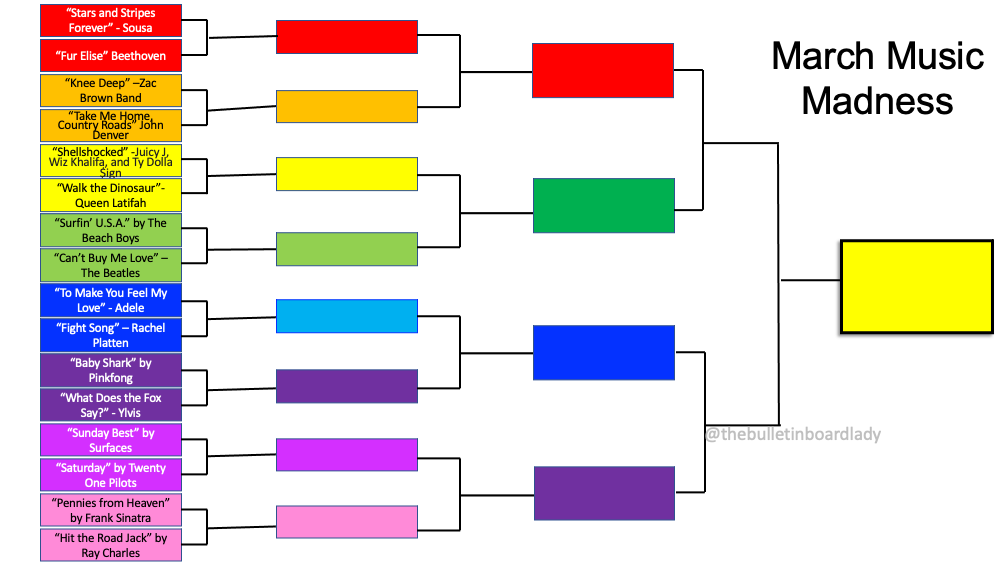
March Music Madness is an event that my school looks forward to during Music in Our Schools Month.  This bracket style tournament has one objective:  crown one song as the champion of music based on student votes.   There are several ways that you can host this event in your music classroom.  Keep reading to learn more.

There are three basic steps to take in planning and carrying out March Music Madness:
    1.  Song Selection
    2.  Experiencing the Music
    3.  Voting

Song Selection

There are several ways to go about selecting songs for March Music Madness.  
  • You Choose - Select 16 songs that you think your students might like.  Consider choosing a variety of different genres and include pieces that are popular now and from several different decades (or centuries!).
  • Staff Chooses - Invite staff members to recommend songs for the music bracket.  Send out an email asking for suggestions or maybe share a Google spreadsheet for them to record their recommendations.  When I do this, I add an extra incentive by rewarding the staff member that recommended the winning song with a gift card.  
  • Students Choose - Have students share their favorite songs.  Be sure to check both the lyrics and any accompanying video for appropriateness if you choose to show videos.

I prefer to invite staff members to submit recommendations.  Their recommendations are already checked for lyrics and content, so that saves me time.  It also creates opportunities for great conversations in students' regular classrooms about the styles, genres and artists related to the songs.  Staff members love checking the bulletin board that I put up with the bracket each week to see how their song is doing.

I am a very theme oriented person and think that adding themes like "Music of the Movies", "Color Wars" (songs with colors in the title), "Heroes and Villains" or "Old and New" (originals and cover versions) can make this even more fun.  A friend of mine did a Disney Showdown theme and students and staff loved it!
March Music Madness in your music classroom

Experiencing the Music

How will your students explore the March Music Madness bracket?  Here are a few options to consider:
  • Lesson Plans - Add the bracket to your lesson plans.  The first week will probably take most of your class period to get through each song.  During the first week I usually only play about a minute to a minute and a half of each song.  The second week maybe 20-30 seconds more.  The last two weeks there is time to play all of the songs as the majority of songs have been eliminated by then.  
  • Morning Announcements - Some teachers share their music bracket on the morning announcements.  Two songs per morning are played and then students vote on the songs with their homeroom teachers and the homeroom teachers enter their tallies on a shared spreadsheet.  The winners are announced the next day and this continues until there is only one winner.  If this works best for you, you will probably want to choose a smaller amount of songs so that you can get through the bracket in a month.
  • Google Slides or PowerPoint - Another option is to create a PowerPoint or Google Slides presentation with the songs either linked to a playlist on a streaming service or to a music video.  Homeroom teachers present the songs, tally votes for their class and then send the count to you.  After the first round, send out a new slideshow with the winners and then repeat until there is only one winner.   If you teach older students, you could share the slideshow in Google Classroom or another digital classroom setting.
March Music Madness in your music classroom


I usually present the songs to students using a video that I find on Youtube or Vimeo.  I add them to Google slides (because we can skip the commercials on YouTube that way) and present them in class and tally the votes myself.  Last year I had to miss a day in March, so I sent the slide show to the classes I would have seen that day and the homeroom teachers tallied votes that day.  The teachers that were involved loved this!

Voting

    I've previously mentioned voting as something that I do or ask homeroom teachers do.  In the past I have had students close their eyes and raise their hands to vote in my classroom.  I ask them to close their eyes so that they don't all follow the popular kid or try to see what a friend is voting for and vote that way.  This has worked for most classes but there are always kids that refuse to cooperate and then blurt out.  This year I am going to experiment with a couple of different ways to vote.
    I'll use pencil and paper with some classes.  They will circle their answers and turn their papers in on their way out of class.  This will require me to create a new page each week and tally all the papers myself.  That doesn't sound fun for nearly 500 students, but I'm testing it with a few classes that have demonstrated issues with self control and blurting. 
    In other classes, I will use Plickers.  Plickers are cards with codes on them.  Students hold them up to vote.  The teacher then scans the cards by taking a picture of the whole class holding up their signs in the Plickers app.  It isn't complicated to use and I think my 3rd, 4th and 5th graders can handle it.  You can learn more about Plickers here.  The best part about this method is that it is fast and FREE!
    You may consider collecting votes digitally using a poll or form in Google Classroom, Padlet, ClassQuestion or other online services.

Displaying the Bracket

I create a bulletin board that showcases the March Music Madness bracket and update it each week as winners are chosen.  It hangs outside the music room which is across from the cafeteria.  Each class passes it at least once a day.  
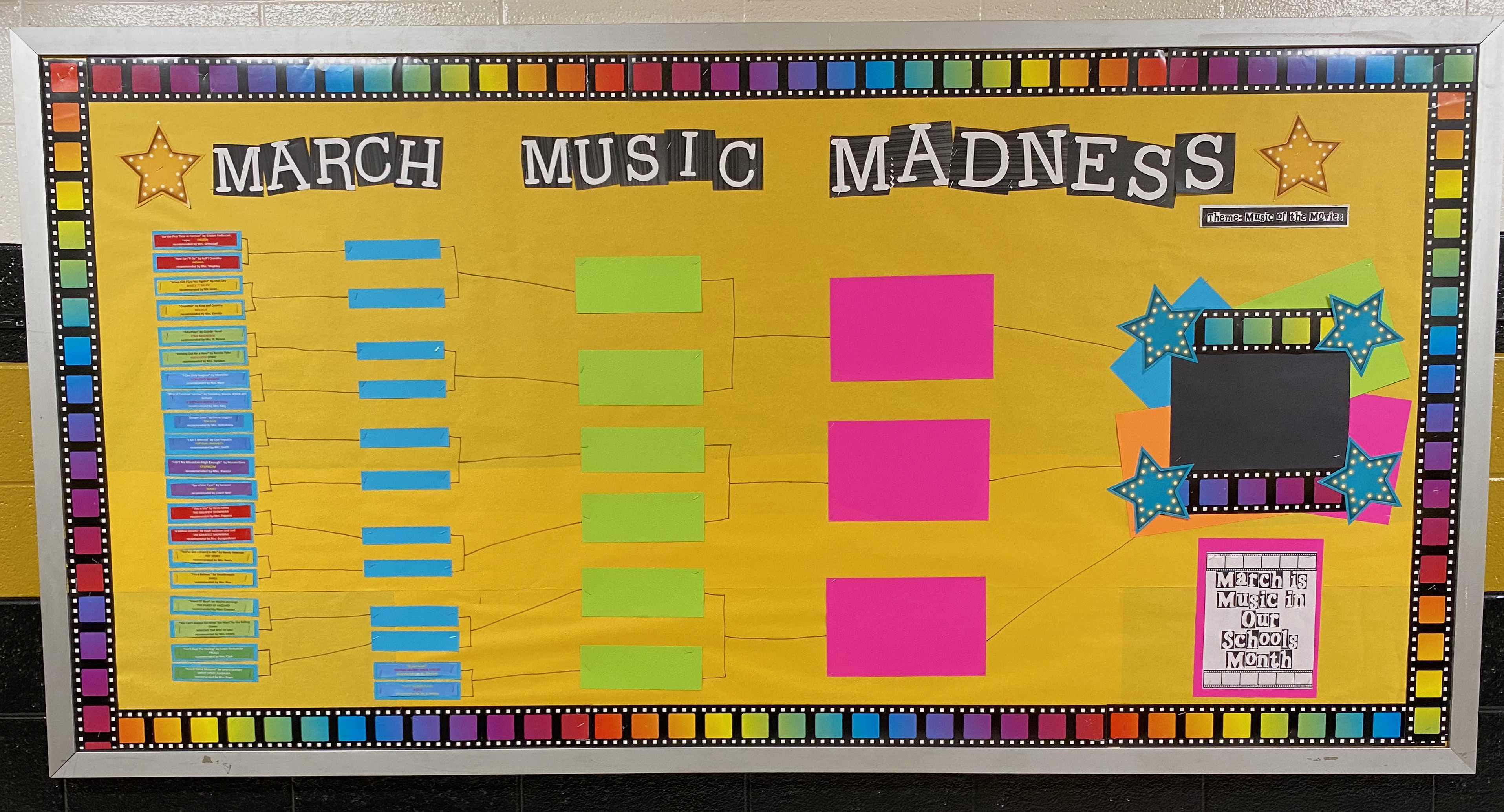

To set the board up, I type up the song titles (including artist or composer and the staff member that recommended it) and place them on the left.  Then I add the next columns of boxes for the winning songs that will move forward.  In the picture above I used a black marker to draw the bracket lines.  In the picture below I used colored masking tape.


Frequently Asked Questions

1. What is the goal of this activity?
One of the goals of this activity is to explore the elements of different genres.  Students can fall in love with new artists, new instruments and new styles of music with this activity.  Another goal is to facilitate higher level conversations between students in which they compare and contrast songs, critique using music terminology and make choices about the kinds of music they want to consume or perform.
2.  What if I miss a day of school and can't leave this for my substitute to do? 
You could try sending the slideshow or links to the homeroom teachers of the classes you missed or just don't include their votes for that round.
3.  I can't use YouTube at school.  What else can I do?  
Use music you already own or link your bracket to a streaming service.
4.  What if my bracket is uneven?
It happens.  Select a song or two and just bump them up to the next round.  This is like getting a "buy" in a sports tournament.  You can select a song that you think will win or a couple of songs and have their first duel be in the second or third rounds.


Need some help getting started?  Check out my March Music Madness Starter Kit.  You'll find more than 50 song suggestions that you can link to your preferred listening media, editable brackets and bulletin board elements.
March Music Madness Starter Kit

Have a great Music in Our Schools Month and may all of your March madness be filled with music!
post signature

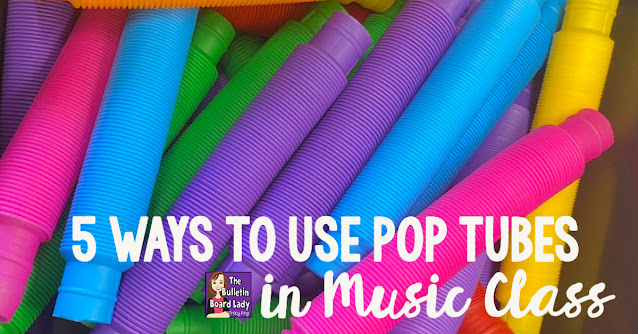
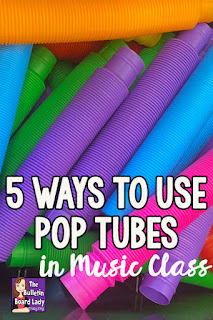
5 Ways to Use Pop Tubes in Music Class

Use pop tubes in music class with these 5 easy ideas. elementary music education, pop toobs, fidget toys, music classroom, music manipulatives.


If you can't beat 'em, join them!  Pop tubes are a popular fidget toy in elementary schools across the nation.  They can also be a fun and engaging tool for music education.  

Pop tubes are plastic bendy tubes that you can pull and push to expand or condense.  They make a hollow popping sound.  When fully extended, you can swing them around in the air and they make a pleasant sound as well.

You can find pop tubes at local discount stores, dollar stores, Amazon and toy stores.  When searching for them you may find them named pop toobs, whirly tubes  or "expanding tube toy." 

When I have students use the tubes, I always have them place it on a drum stick or rhythm stick.  This allows students to move them back and forth quickly without the tubes bending wildly.  I also insist that students hold their sticks and tubes horizontally.  This curbs the giggles of 5th and 6th grade boys that arise when held vertically.

Ways to Use Pop Tubes

Use to Accompany

Pop tubes make a delightful and oddly satisfying sound and are fun to play with pieces like "La Raspa" and "Blue Danube" as the obvious "ti ta" response to these pieces.  I've also used the pop tubes in the place of clapping or snapping for songs like "The Clapping Song",  "Addams Family Theme" and "If You're Happy and You Know It".
If you're happy and you know it, pop your tube.
Pop it high and pop it low.  Pop it fast and pop it slow.
If you're happy and you know it, pop your tube.

Rhythm Reading with Flashcards 

Practicing rhythms with flashcards is as boring as practicing multiplication facts with flashcards.  Add pop tubes as the instrument students use and suddenly flashcards are great fun!  This makes a great workstation.  Set out 4-5 pop tubes and a stack of flashcards.  Done.

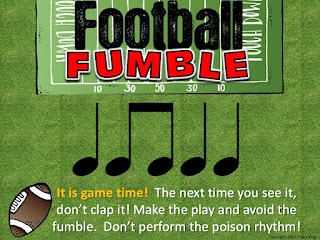
Poison Rhythms

Pop tubes have made a fun addition to Poison Rhythm Games.  You can read more about how to play Poison Rhythm here: POISON RHYTHMS.  You can also purchase one or all of the ready to go games at my TeachersPayTeachers store The Bulletin Board Lady.

Use pop tubes in music class with these 5 easy ideas. elementary music education, pop toobs, fidget toys, music classroom, music manipulatives.


Assessment

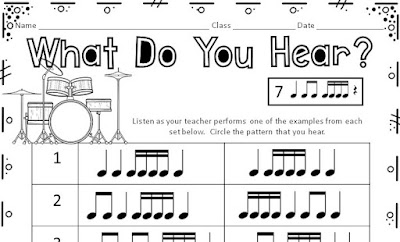
I use these What Do You Hear worksheets with my 3rd-5th graders.  The process is to perform the patterns, then listen as I play the pattern on a drum, cowbell or other percussion instruments.  Next, they circle the pattern they heard.  I add pop tubes to the first step.  Students read and perform the patterns on the pop tubes, then listen, then circle.  It really adds some fun to assessment. Click the picture to take a closer look at this set of worksheets.

Use pop tubes in music class with these 5 easy ideas. elementary music education, pop toobs, fidget toys, music classroom, music manipulatives.


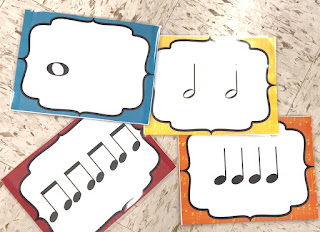
Four Rhythm Cards

I should really find a better name for these, but it is working for now.  You can download these cards for free and read about other ways to use them HERE.  Here's what I do with the cards and pop tubes:

After passing out the pop tubes, I choose a song with a medium to fast beat (which are much easier than slower songs) and start it while holding up one of the cards.  Students use the pop tubes to play the pattern as an ostinato until I change the card.  That's really it!  It is a fun way to use pop music in your classroom.  (See, what I did there?  POP music?  LOL). It also gets students excited about practicing rhythms and performing as an ensemble.

Use pop tubes in music class with these 5 easy ideas. elementary music education, pop toobs, fidget toys, music classroom, music manipulatives.


I store my pop tubes in a plastic shoebox container.  They are easy to clean.  You can have students expand them and then spray them with Lysol or they can go in a sink of hot, soapy water.  If you enjoyed these ideas, pin them for later.
Use pop tubes in music class with these 5 easy ideas. elementary music education, pop toobs, fidget toys, music classroom, music manipulatives.


post signature

DIY Light Up Staff

DIY Light Up Staff Board, treble clef display. Bright and fun way to learn treble clef lines and spaces names. Music teacher hack.

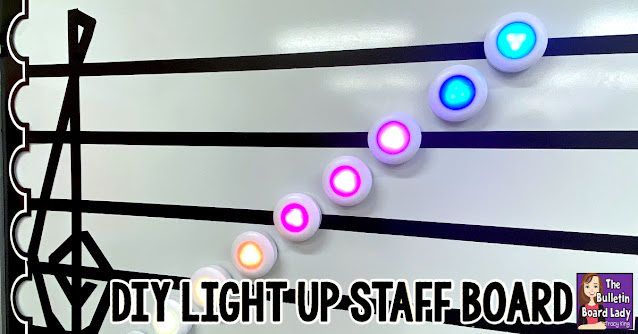
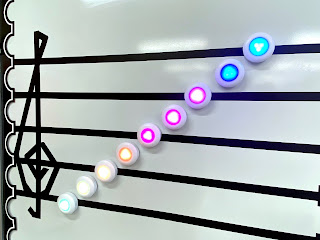
I have wanted to create an interactive treble clef staff display for my classroom for such a long time!  Using just a few simple and easy to find supplies, my students and I now have a beautiful and engaging new tool in the music room.

I use this staff display to show melodies for sight reading, lighting up a specific interval that I want them to notice.  I use it to highlight the notes that we will be using on Orff instruments.  I've used it when grading pitch naming worksheets by having students come up and tap the light of the correct answer.  I've even used it for games and centers.

As a center, students have labeled the lines and spaces of the treble staff.  They have taken cards from my Pitch Match Up sets and created the words on the staff.  They have used it to create their own "words" with the pitches of the treble clef staff.  I really feel like I have just scratched the surface of using this in my classroom. 

DIY Light Up Staff Board, treble clef display. Bright and fun way to learn treble clef lines and spaces names. Music teacher hack.

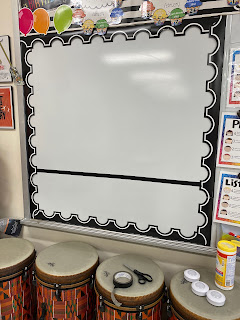
Let's get started with the supplies that you will need to create a light up staff display in your room. First consider the space that you will have for this.  You'll need some kind of magnetic white board or something similar.  I used a portion of a long white board in my room for this display.

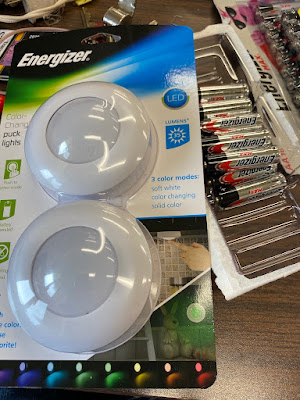
Next, you'll need some puck lights.  You can also find them named push lights, tap lights and under the cabinet lights.  They often come in the shape of a circle which works great for note heads!  You can find them at hardware stores, Walmart, Target and on occasion at dollar stores.  I wanted mine to change color and I found two packs of Energizer Coloring Changing Puck Lights at Target.  

You'll also need black masking tape or black electrical tape, scissors, a roll of magnetic tap (the thick kind) and batteries for your puck lights.  

DIY Light Up Staff Board, treble clef display. Bright and fun way to learn treble clef lines and spaces names. Music teacher hack.

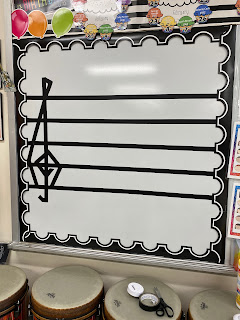
I started with a portion of my white board that I hadn't used and added a bulletin board border.  This one is from Schoolgirl Style.  I used black masking tape to place the staff lines.  Be sure to measure the distance of your lines by placing one of your puck lights between them.

DIY Light Up Staff Board, treble clef display. Bright and fun way to learn treble clef lines and spaces names. Music teacher hack.
I also used the masking tape to create the treble clef.  I'm sure there are more eloquent ways to do this, but this was fast and efficient.

Next I placed the puck lights on the board by hot gluing magnets to the back of them and them putting them on the staff.  
DIY Light Up Staff Board, treble clef display. Bright and fun way to learn treble clef lines and spaces names. Music teacher hack.DIY Light Up Staff Board, treble clef display. Bright and fun way to learn treble clef lines and spaces names. Music teacher hack.

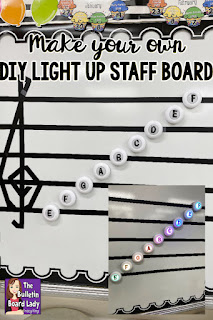
I considered stopping right here and using the display as it was, but was concerned that students who struggled with naming the pitch names would not find this very helpful.  I found some letter stickers at a local store and added those.  This was a great decision and has been really beneficial to all students.  If you are proficient with a cutting machine like a Cricut, you could use that to make your letter stickers. 

DIY Light Up Staff Board, treble clef display. Bright and fun way to learn treble clef lines and spaces names. Music teacher hack.


Like this idea but need to work on it later?  Pin this post!
DIY Light Up Staff Board, treble clef display. Bright and fun way to learn treble clef lines and spaces names. Music teacher hack.


post signature

Teaching Music During School Closures


Teaching music during school closures can be a challenge. Distance learning for group performances, singing, making music together can't be replaced.  Games, activities, videos and project ideas for music remote learning are listed here.  Free downloads too!

Let's face it, nothing can replace a classroom full of music making.  Singing, dancing and playing instruments joyfully together must be experienced authentically in person.  When that isn't possible, what should we do?  I'm afraid I don't have a perfect answer, but I'd like to share a few ideas with you and I hope that you can use them or find that they are a springboard for your own creativity.

Make Music
Incredibox (free on PCs, paid app for tablets and phone) Students can create loops using many different sounds and then share them with you.  Assign THIS free project to have students create music for different movie scenes and email you their mixes through Incredibox.
Isle of Tune - I try not to play with this very often because I lose huge chunks of my life to it.  Free on PC.  Build a town with a musical twist.  Elements like light posts, houses and trees are the sounds and cars drive down the road and "play" the composition.
Play Boomwhackers - Encourage students to notate melodies with crayons or markers.  Write a rhythm using Boomwhacker colors and perform on these digital Boomwhackers.
SING! Mrs. Miracle has some fabulous suggestions to keep your kids singing.


Music Theory
Staff Wars (free on PCs, $ .99 for tablets and phones) Practice pitch names in a seriously cool game.
Music Tech Teacher - games, worksheets and quizzes
Music Games from Plank Road Publishing -high/low, pitch names and more
Compose Your Own Music (Classics for Kids) -drag notes to compose, students can share their composition by emailing you a link.
The Rhythm Trainer - rhythmic dictation.  You pick what note values to use.


Music Games
PBS Music Games
Music Symbols Matching Game


Music History
Learn About Composers (Classics for Kids) - Have students read about a composer of their choosing and write a 5-7 sentence paragraph to summarize what they have learned.  I use THIS template for paragraph writing.
Composer of the Month - A great website with composer biographies and links to biography videos.


YouTube Awesomeness
Carnival of the Animals - Use with this set of listening worksheets.
TVO Music Videos -not YouTube, but a great collection of videos for kids
Short Composer Biographies by Five Minute Mozart
Music Concepts Videos by Music K-8 - I LOVE these videos and so do my students.  They are great for introducing or reinforcing a concept and could be used before a worksheet or assignment.  Concepts include forte/piano, presto/largo, major/minor, etc..  Try this free interactive game about musical opposites from Linda McPherson or these free high/low worksheets by Sara Bibee.


Learn About Instruments
New York Philharmonic KidZone (requires Flash)
Classics for Kids - a variety of fun and engaging activities


Projects
Star Spangled Banner Evaulations -Links and free worksheet.
Build an Instrument -resources from Dallas Symphony Orchestra
Rubber Band Harmonica -It's not a beautiful sound, but it works!
DIY Music Instruments - Several ideas for crafting instruments at home.


Musicals
Netflix, Vudu, Hulu and other streaming services have several musicals that your students might love.  Try out some of the worksheets in this free musicals sampler.  There are complete sets for many musicals in this bundle.

Remember that when posting worksheets for students that you must protect the property of the copyright owner by placing the worksheets in a secure environment.  That means that the files must not be available for the whole Internet to download if they want.  Secure them on your school website with a password or a file service like Dropbox.  Send parents the link and the password.  You can also send the files via email or Google Classroom too.  Students must login to access them this way.


If you liked these ideas, PIN THEM for later!
Teaching music during school closures can be a challenge. Distance learning for group performances, singing, making music together can't be replaced.  Games, activities, videos and project ideas for music remote learning are listed here.  Free downloads too!


post signature

Create a Music Workstation with an Ornament Organizer

Learn how to create a variety of music workstations using a plastic Christmas ornament organizer that you can use all year round.  Students can practice identifying music symbols, instrument families, note values and more by gently bouncing a ball or by organizing ornaments!  Fun!  This DIY music room project will impress your music students.

I am a teacher hoarder.  It is true.  I confess.  Sometimes I buy things because I can imagine a workstation or classroom activity that I'll create with it.  Sometimes I buy things because I am inspired, but haven't quite figured out how to use it yet.   Crazy, right?  This is one of those things that I purchased because I was really inspired and had several ideas right away.  I hope that you'll enjoy using it in your classroom too.

So what was this inspiring thing that I found and purchased right away?  A plastic ornament organizer.  I purchased  one at Walmart and immediately knew that it would be awesome for composing.  It had four rows of four wells.  That sounds like a 16 measure or 16 beat (4 measures) composition to me!

COMPOSING
To create this activity, I purchased some inexpensive ornaments.  I chose the least breakable kind that I could find.  You could also use plastic Easter eggs, ping pong balls, plastic pumpkins, jack-o-lanterns or even flashcards to make it seasonal for other times of the year.  I use this as a workstation. Here's what we do:

Students randomly pull out an ornament and place it anywhere in the container, rhythm side up.  (Some ornaments have 2 sides.  One side is more complex than the other.). Then the group claps the rhythm.  Students continue taking turns until all of the wells have an ornament in them.  Then they clap the entire composition.  If there is time left during their workstation rotation, they can do it again.

With some grade levels, I have them copy their composition down onto paper and turn in.  Other times, they notate it on a 16 box grid using lap packs.  Learn more about lap packs and download a freebie in THIS blog post.

I think this would be a fun center to use to decipher the rhythm of a familiar song.  For the holidays, "Jingle Bells" would be easy.  When creating the rhythms on the ornaments you would need to make sure that you had enough of the required rhythms to make this activity work.


Learn how to create a variety of music workstations using a plastic Christmas ornament organizer that you can use all year round.  Students can practice identifying music symbols, instrument families, note values and more by gently bouncing a ball or by organizing ornaments!  Fun!  This DIY music room project will impress your music students.Learn how to create a variety of music workstations using a plastic Christmas ornament organizer that you can use all year round.  Students can practice identifying music symbols, instrument families, note values and more by gently bouncing a ball or by organizing ornaments!  Fun!  This DIY music room project will impress your music students.

Learn how to create a variety of music workstations using a plastic Christmas ornament organizer that you can use all year round.  Students can practice identifying music symbols, instrument families, note values and more by gently bouncing a ball or by organizing ornaments!  Fun!  This DIY music room project will impress your music students.


MATCHING
Using a 20 well ornament organizer and a new set of ornaments, I created a matching game with music symbols and notes.  I drew the symbol on a small pieces of masking tape and stuck them on the wells.  On the ornaments I wrote the name of the symbol.

Students pull an ornament out of a gift bag and match the name on the ornament with a place in the ornament organizer.  Then they check themselves using a display that I have set up in my room.  You can check out some of the sets HERE.

This would be fun to do with tempo and dynamics terms.  Write the word on the piece of tape or sticker and write the definition on the ornament.

BOUNCE THE RHYTHM
Learn how to create a variety of music workstations using a plastic Christmas ornament organizer that you can use all year round.  Students can practice identifying music symbols, instrument families, note values and more by gently bouncing a ball or by organizing ornaments!  Fun!  This DIY music room project will impress your music students.This by far my students' favorite way to use the ornament organizer.  In the bottom of each well in the container, I write a number.  I used 1, 2, 3, 4 and 1/2.  Then I drew each of these notes on a piece of duct tape and placed one each on a tennis ball:  quarter note, half note, dotted half note, whole note and eighth note.

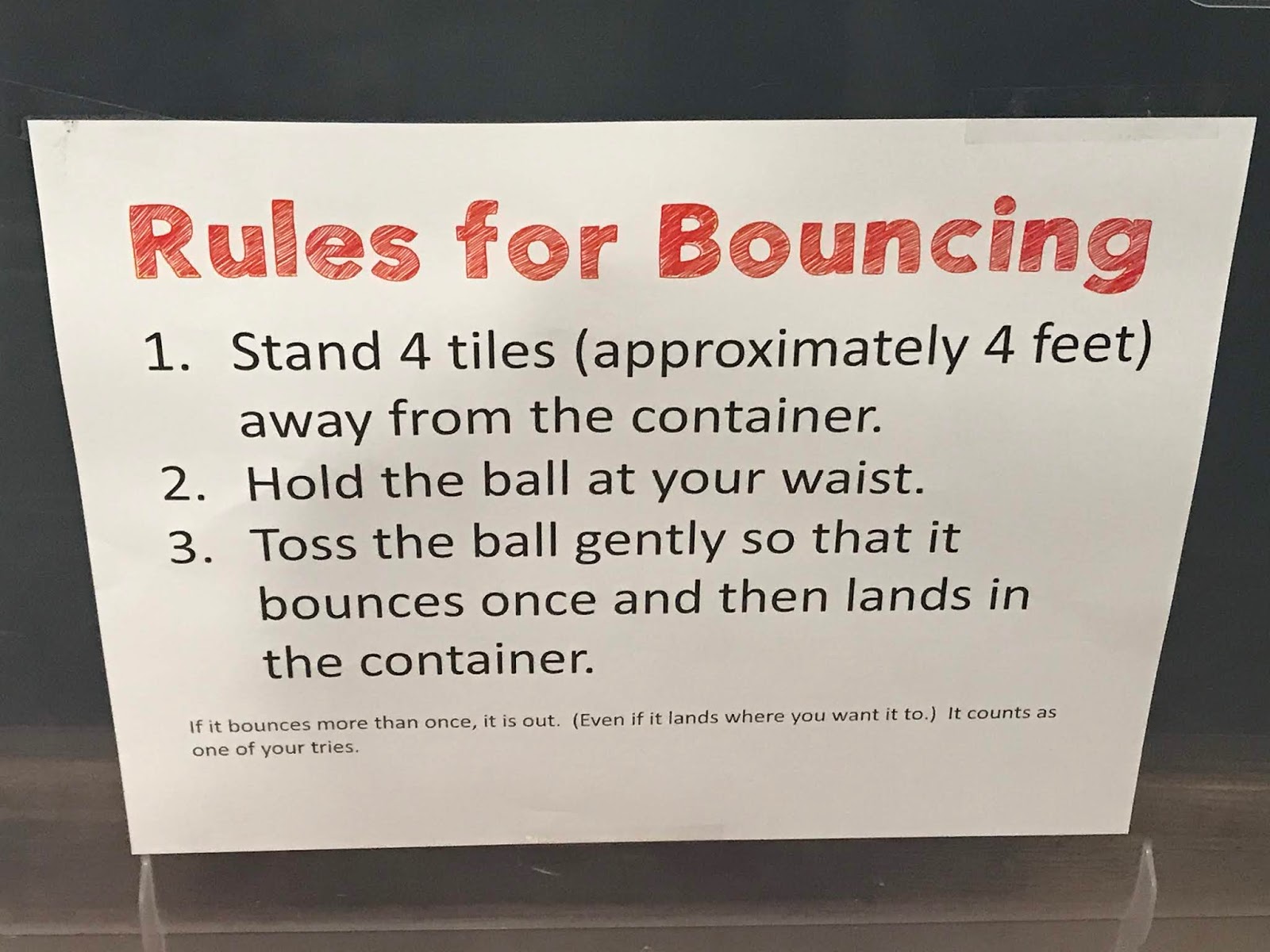
To play, students stand four feet away from the container.  In my classroom this is four floor tiles from the container so it is easy for them to measure.  You could also put a tape line down if you need to.  I rest the container against a wall to provide a bit of stability and keep the balls from flying past the container.

Students hold their hand at their waist and gently bounce the ball so that it lands in the container.  They aim for the number that matches the number of beats of the note on each ball.  FUN!

This would be fun to do with instruments and their families.  Use 20-25 different balls and write the instrument name on them.  Label the container with the instrument families.
Learn how to create a variety of music workstations using a plastic Christmas ornament organizer that you can use all year round.  Students can practice identifying music symbols, instrument families, note values and more by gently bouncing a ball or by organizing ornaments!  Fun!  This DIY music room project will impress your music students.

I spoke to my PE teacher about how to make this activity as successful as possible.  She stressed keeping the ball waist high and suggested using a low bounce tennis ball (available at most places that sell them).  Ping pong balls or Nerf balls might make great options too.

I hope that your students enjoy this activity.  Look ornament holders during the Christmas season and the first part of January.  If you liked this idea, PIN it for later!

Learn how to create a variety of music workstations using a plastic Christmas ornament organizer that you can use all year round.  Students can practice identifying music symbols, instrument families, note values and more by gently bouncing a ball or by organizing ornaments!  Fun!  This DIY music room project will impress your music students.


post signature

99 Music Workstations You are Going to Love


A HUGE list of Music Workstations for the elementary music classroom.  You are going to love these center ideas for pitch, rhythm, singing, composing, playing instruments and more.

I love using workstations in my classroom.  I wanted to share a list of some of my favorites, but I think I got a little carried away.  Here are almost 100 workstations that I love with links and explanations.  Enjoy!

Coloring

Color by Note  These activities are fun for students an allow them to show what they know by coloring their answers.  Some of these activities may take more than 10 minutes.
Writing Prompts   Perfect for workstations!  Students write an answer, a paragraph or a story based on the prompts.  Use regular paper or Chrome books and Google Classroom!
Composer Coloring Sheets  Although I often use these while listening to music, they work great in a workstation.  Even the big kids enjoy this!
Primary Writing Prompts   Younger students that may be pre-readers, need to be able to express their ideas with words and pictures.  These primary writing prompts provide space for both.
My Book of Mary Poppins. As a review after we have watched the movie (or portions of it), we color these books that highlight some key items in the movie.
Instrument Coloring Sheet This is probably pretty obvious.  Coloring sheets for instruments or for groups of instruments in their families are great for workstations.
Music Memory Book This is best when used at the end of the school year.  I usually have students work on the books for about half of a class period.  Next class, they finish them as one of the stations that I have set up.
Roll and Cover worksheets  Easy peasy.  Print and set in a workstation with some crayons and some dice.  Actually I use one BIG die and the group shares.  Fun!


Composing

I find that it is really difficult to complete a composing project in the small amount of time that students have in a workstation.  So, instead of doing an entire project, these centers allow students to compose by arranging.  Take a closer look:


Dynamics and Tempo

Candy Corn -Dynamics  This seasonal workstation is simple to do.  Students complete a candy corn puzzle that contains a dynamic term, symbol and definition.  Then, they copy that information to a chart.
A Dab of Music Learning - Dynamics and Symbols  I love dabbers and so do my students!  The set focuses on dynamics and music symbols.  I usually plan 2-3 worksheets for one center.
Dynamics Punch Cards  I have quite a few hand held hole punchers and they come in handy for this station!  Take a closer look by clicking on the link.


Instrument Families

A Dab of Music Learning- Instruments   Another dabber activity set.  This set focuses on instrument families and provides many opportunities for students to show what they know.
Instrument Matching Game  Use pictures of instruments or print this set to use to have students match pictures of instruments with the names of instruments.
Mystery Instruments  One of my favorite activities. I tell students to be sneaky detectives and not tell any other groups what instrument they think is the mystery instrument.  They fill out a "case file" that records the clues they discover. At the one of the center rotations I open the bag and show the class.  Using a different instrument, you could do this many times.
Clip It-Instruments Edition   Just add clothespins to these cards for an engaging workstation that reinforces instrument names and simple rhythm patterns.
Read It, Trace It, Stamp It  This station requires some letter stamps and an ink pad.  Get the washable kind of ink pads.  Trust me.
Dip Tray Family Sort  Using an inexpensive dip tray from the dollar store, this station is a breeze to set up.  Read more about it.
Instrument Coloring Sheets  Use these to reinforce your unit on instrument families.
Instrument Family Punch Cards  Which of these instruments is in the brass family?  Punch your answers with a hole puncher.  Fun assessment.
My Book of Instruments  These take a little bit of time to copy and assemble but are great for small group work or workstations.  Do one family at a time or all instruments at the same time.
Instrument Investigations  This activity takes 15- 20 minutes so you may need to plan a day of longer workstations to make this go well.
Misspelled Instrument Punch Cards  I think it is important that students learn to spell instrument names correctly.  I don't always feel like I have enough time during instruction, so I love adding these punch cards to a workstation rotation.


Movement

Yes!  You can do a movement center!  Set clear expectations and add music (or not) and these activities work so great in stations.  Student love them too.


Non-Pitch Percussion Instruments

Playing instruments is one of my students' favorite workstations and I understand why!  These station sets make playing instruments a pleasant and organized experience.  No, really.d


Pitch

A Dab of Music Learning - Intervals  These dabber activities are great for upper grades.
A Dab of Music Learning -Pitches   Drilling pitch names doesn't have to be boring.  These dabber activities are designed to be completed quickly.  That makes them perfect for workstations.  
Treble Clef Twister  There are many ways to do this, but essentially it requires a staff on the floor.  This could be one that you create with tape, one you already have on a rug or one that you draw on a plain shower curtain.  The link will take you to a sheet that I use as a spinner.
Musical Mneumonics  Another way to drill those pitch names is to have students create their own musical mnemonics.  
Bottle Cap Staff   I have collected hundreds of bottle caps from 2-liters of soda, water bottles, etc...  They make perfect note heads.  Take a closer look to see how it could work in a center.
Bottle Cap Pitch Sort  I also took some of those bottle caps and modge-podged some staves and notes on them.  Students sort them into piles based on their letter name.
Flashcards  - Yeah.  They are boring, but neccessary.  It seems that kids hardly ever use them anymore so maybe they will find them to be a novelty.
Worksheets   I know.  It sounds boring, but these worksheets are attractive and easily completed in the time that students have in a workstation.
Swat the Staff  Create a staff on the wall with tape.  Two students stand next to it, another calls out a letter from the musical alphabet.  The first one to swat the correct line or space wins!
Pitch Match Ups  Basically flashcards, but you match words spelled out by notes on the staff to the words.  Lots of fun designs.
Bop It/Simon Says  Melodic retention.  :-)


Reading

I almost always use my reading area as a stop in the workstation rotation.  Here are some links that might help you out with your reading area.
Classroom Library  Need some ideas for your reading area?  Check out this huge list!
Books for Primary Classes  This is a great list of books that your primary classes will love.
Men and Women of Jazz  Print and laminate the pieces of this bulletin board and include them at a workstation.  They contain short passages and students have time to read more than one during their center rotation.
Meet the Composers  Similar to the Men and Women of Jazz, this bulletin board set can become a reading station too.
Magazines - Do you subscribe to Music Alive or Music Express?  Leave a few copies in a crate and set it in the floor.  Instant workstation!


Rhythm

A Dab of Music Learning - Rhythm  Dab.  Dab. Dab dab dab.  Note values, musical math and more in this set.
Drawing Notes-lap packs  This link takes you to a blog post about Lap Packs.  I've used them with Kindergarten through high school.  For the littles, it is a great way to practice drawing notes.
Swat the Rhythm  We like swatting things in my classroom.  The link takes you to a few sets that I have created.  You can do the same activity with flashcards.  Lay them on the floor.  One student claps a rhythm that is on one of the cards.  The first student to swat the right answer, wins a point.  
Rhythm Blocks  Duplos and legos make great music workstations!  Check out this blog post to learn more.
Craft Stick Rhythms - Take craft sticks and use them to make quarter notes and barred eighth notes.  Students clap their "compositions" and then make more.
Roll and Cover  Roll and cover activities allow students to reinforce their knowledge of note names.
Musical Yahtzee  From Layton Music, this activity is great for small groups or workstations.  I laminate the score sheets when using them in workstations and add some music dice.  
Noodle Notes. I love pool noodles!  Learn about how to create noodle notes in this blog post.
Caterpillar Rhythms   Construction paper circles or paper plates become caterpillar bodies in this activity.  Add rhythm patterns or single notes on them and students build a caterpillar pattern.  The longer, the better!
Play Dough Mats  Laminate and just add play dough.  Students learn about notes and symbols through play.
Don't Break the Ice -take a Don't Break the Ice game and draw different notes on each block (quarter, half, barred eighths, 4 16ths, etc....).  Create a spinner with whatever note values you used.  Students spin and the tap out one block with that note on it until somebody breaks the ice.
Add it Up Rhythm Cards  Musical math!  This freebie can be used in many ways.
Note Value Punch Cards  This is another activity for hole punchers that can assess student knowledge.
Rap It Clap It Music Match It  This is an old faithful workstation for me.  Students match the syllables of themed words to simple rhythm patterns.  Perfect for a workstation.  I often do this activity with the whole group and use it in a workstation later.
Clip It Games  Clip it games require students to match words with a rhythm pattern that most closely matches its
Rhythm Pins w/Paint Chips  Cut the paint chips so that there are 4 boxes on them.  Draw single beat notes or rhythms on clothespins.  Students pin a measure on the paint chips, clap and repeat.
Candy Land (note differentiating)  Instead of using Candy Land for just color recognition, add music symbols, notes, pitches, etc... to the colors.  Fun!
Musical Jenga - Check out this awesome idea from the Music K-8 Idea Bank for creating a musical Jenga game.
Tracing Sheets  Get acquainted with notes and their values with these tracing sheets.  Great for younger learners.
Music Math Houses   I laminate these and use dry erase markers.  Students add up all of the musical math problems in colorful houses and check their own answers.
Note Knacks. These are great!  I have one student create a four beat measure and the others recreate it with the Note Knacks.  They are a little pricey, but worth it.
Dot Composing  This is a simplified way to compose using quarter notes, barred eighths or 4 16th notes.  Read more about it in this blog post.
Rhythm Blocks  Kelly Parrish from Rhythmically Yours makes these amazing rhythm blocks.  I use them for rhythmic dictation.  At a workstation, one student secretly creates a rhythm pattern and then claps it for their group.  The other students recreate that with their rhythm blocks.
Poison Rhythms. Using a lap top or table, I have students play poison rhythm just they way we do as a whole group.  FUN!  The link will take you to several different versions.


Vocal Stations

Vocal Explorations  -Vocalizations are a few workstation and let students be a little silly and creative.
Puppets and Books  Use puppets and some Wee Sing books at a station.  The goal?  SING!
Sticky Note Singing   Take a song that you are working to have memorized.  Cover part of it with a sticky note and try singing it.  Add another and try again.  Let your neighbor add the next one and try again.  It is a fun way to work on memorization and to get students singing at their center.
ABC Chart   This one is easy peasy to create.  Check out the blog post for a simple description of this activity.
Singing Sticks from Music Mom  These little singing sticks are great tools to reinforce Solfege or at my school to reinforce the pitch numbers of a major scale.  After using them with classes for a while, they can easily practice in workstation groups to sing patterns.
Singing Rocks   I love my singing rocks!  They really allow for improvisation and creativity.  After I have modeled this activity in class, students are able to do it in a workstation.  It is great to listen to them sing their imaginations out!
Blob Chorus - Ear Training  This is an app that is so fun that students don't realize they are learning!  Hurray!

STEAM

Xyloba   Engineer a marble run that plays a song with this awesome set!
Found Sounds  Collect some junk.  Put it in a box.  Let students become detectives, inventors and musicians.
Stikbot Animation  Animate a dance.  Choreography and green screen technology can create some amazing videos.
Spec Drums  There are so many ways to use Spec Drums in workstations:  exploration, composition, practicing simple folk songs and more!
Ozobots   Code these little robots to show the tempo changes of a piece of music.  Use the workstation time to have them practice creating paths that change speeds (or tempos!).
Makey Makey   My students always fight to be the first group at this station.  I add the instructions, a Makey Makey invention set and some random things for students to experiment with like fruit, play dough, hot dogs...whatever.  Students use these items to play a keyboard or drum on the computer.  I definitely recommend this activity!


Apps

There are SO many great music apps out there.  Here are a few that I think work really well in workstations.


Miscellaneous

Music Interest Inventory Punch Cards   This is a fun addition to workstation rotations at the beginning of the school year.  You can learn a great deal about your students.
Talk About Tunes   I mean, they are going to talk anyway.  Why not make it musical?
Carnival of the Animals  -Use a day of workstations to review Carnival of the Animals.
Peter and the Wolf - This set lets you expand your Peter and the Wolf unit in some fun and creative ways.
Star Spangled Banner   I use this every singing year with 3rd or 4th grade.  It is a great way to learn more about our national anthem, help students memorize it, learn the vocabulary and more.  I always plan a couple of class periods to do all of the stations in this kit.


Whew!  What a list!  If you loved these ideas, PIN THIS for later!
A HUGE list of Music Workstations for the elementary music classroom.  You are going to love these center ideas for pitch, rhythm, singing, composing, playing instruments and more.


 post signature