Header

Mrs. King at Home About Mrs. King Contact Mrs. King Mrs. King's Music Class HOME Image Map
Showing posts with label centers. Show all posts

Organizing Books in Your Music Classroom


Organize books in your music classroom. Ideas, tools for music room library and free book bin labels to help organize those children's books.

 One of the things in my classroom that I have worked the hardest at is growing my music library.  No, not that one.  My books about music and musicians, not the sheet music and octavos.  I love my classroom library!  Here's the story of how it has grown and evolved over the last 10 years or so.  Read on to find solutions for your music room and a free resource to help you organize your books.

For several years I just piled my books onto a little shelf with no system whatsoever.  This worked quite well until I started buying duplicates.  As my collection grew, I needed a better solution.

Organize books in your music classroom. Ideas, tools for music room library and a free download to help organize those children's books.

The next step was to put SOME of the books into book bins with labels on them.  I picked a few categories that I had several books for and the rest I just tossed in a milk crate.  This worked beautifully for centers.  I created a small reading area with a rug and loved keeping this a permanent center no matter what group I was teaching.

Organize books in your music classroom. Ideas, tools for music room library and a free download to help organize those children's books.

During the next few years I gathered books from used book stores, discount sellers, Amazon and from authors in workshops I attended.  You can see some of my favorites in these posts:  Books You Need in Your Elementary Classroom Primary and Upper Elementary.  As my collection grew I needed a way to keep track of what I had.  At first I created a spreadsheet, but to be honest I just couldn't keep it updated.  It felt cumbersome and wasn't easy to edit from my phone.  That's when I was inspired by a post from Katie Wonderly on Instagram and downloaded Book Buddy.

Book Buddy allowed me to QUICKLY add books to the app and download a paper list only when I needed it.  I currently use Book Buddy Pro to catalogue my classroom library, keep it organized and to keep me from buying duplicates.  All I do is use my phone to scan the barcode and for most books the information about the book just pops up, including cover photos!  I can add custom categories too which is how I organize my books.

Organize books in your music classroom. Ideas, tools for music room library and a free download to help organize those children's books.

Current Categories:
BOOKS ABOUT MUSICIANS  In this category I put picture books with stories about musicians that may not be bibliographies or about musicians of a specific genre.
BOOKS THAT RHYME  I use rhyming books for drumming, for movement, to add instrument accompaniment and more.  In this bin students can re-read some of the ones we have used in class.
DANCE AND MOVEMENT  I guess this category is pretty self explanatory.  Titles like Giraffes Can't Dance and Boys Dance are in this category.
CAREERS IN MUSIC  I NEED more books for this category. Right now it contains one fabulous book called Mandy's Mom The Music Therapist.
COMPOSERS  In this category are the typical composer books that many of you may have.  I'm always looking for books about more contemporary composers.
INSTRUMENTS -There are mostly non-fiction books in this category, but some titles like The Remarkable Farkle McBride are also in there.
LEARN ABOUT MUSIC This category used to be pretty dull.  LOL.  Recently I have added books like When Step Met Skip and Tiger Tempo. My students love them!
MUSIC GENRES  In this category there are books about different genres of music like When the Beat Was Born and The Story of Country.
MUSIC HISTORY  I am currently not using this category as the books that I have all fit into other categories too.
MUSICIAN BIOGRAPHIES  In this category you'll find non-fiction books about musicians.
NON-MUSIC I have several books about character that go in this bin.  Also books that don't rhyme but that I may have used for some other purpose in class are here.
PATRIOTIC/AMERICN  Books about the Star-Spangled Banner, song lyric books with patriotic songs and books about songs like "America the Beautiful" are in this category.
SEASONAL AND HOLIDAY Books about holidays or about seasonal topics or music are in this bin.  My favorite might just be "Leaf Man".
SONG HISTORY  This category is one that I am introducing this year.  It holds books about the history of certain songs. 
SONG LYRIC BOOKS This category is SO full that I have 2-3 bins of books in this category.
THIS AND THAT  I don't have a category for everything.  Oh wait....this is it!  LOL.  If it doesn't fit anywhere else, it fits here.
WOMEN IN MUSIC  I am introducing this category this year and moving some books from the Books About Musicians category into this one.  I have a LOT of books about Dolly Parton.  This is almost a bin filled will Dolly books.
WORLD MUSIC  I don't like the name of this category, but I don't have enough books from one specific place or about one specific culture to create bins for them.  Yet.  I hope to one day.

Before students use the library, I remind the class that they should return the book to the SAME bin that they take it out of.  I didn't expect this to work.  I was surprised that about 80% of the books DID remain in the right container, but it is not foolproof.  This year I'll be adding color coordinating dot stickers to both the bins and the books that go in them so that they also have a colorful way to remember where they go.

Organize books in your music classroom. Ideas, tools for music room library and a free download to help organize those children's books.

To help you get started organizing your music room library, check out these colorful labels that can fit on a book bin, magazine box or basket.  The categories mentioned about are all included, but they are not in any particular order.  If you find these handy, please leave some feedback!


If you liked the ideas in this article PIN it for later!

post signature


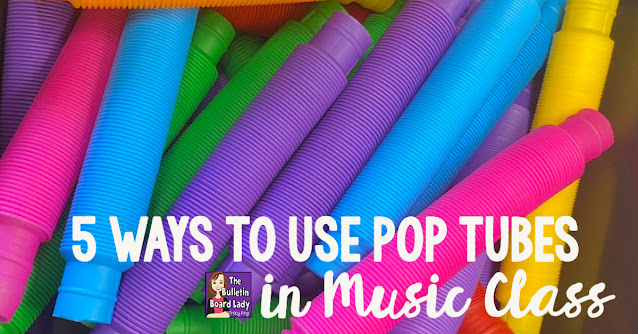
5 Ways to Use Pop Tubes in Music Class

Use pop tubes in music class with these 5 easy ideas. elementary music education, pop toobs, fidget toys, music classroom, music manipulatives.


If you can't beat 'em, join them!  Pop tubes are a popular fidget toy in elementary schools across the nation.  They can also be a fun and engaging tool for music education.  

Pop tubes are plastic bendy tubes that you can pull and push to expand or condense.  They make a hollow popping sound.  When fully extended, you can swing them around in the air and they make a pleasant sound as well.

You can find pop tubes at local discount stores, dollar stores, Amazon and toy stores.  When searching for them you may find them named pop toobs, whirly tubes  or "expanding tube toy." 

When I have students use the tubes, I always have them place it on a drum stick or rhythm stick.  This allows students to move them back and forth quickly without the tubes bending wildly.  I also insist that students hold their sticks and tubes horizontally.  This curbs the giggles of 5th and 6th grade boys that arise when held vertically.

Ways to Use Pop Tubes

Use to Accompany

Pop tubes make a delightful and oddly satisfying sound and are fun to play with pieces like "La Raspa" and "Blue Danube" as the obvious "ti ta" response to these pieces.  I've also used the pop tubes in the place of clapping or snapping for songs like "The Clapping Song",  "Addams Family Theme" and "If You're Happy and You Know It".
If you're happy and you know it, pop your tube.
Pop it high and pop it low.  Pop it fast and pop it slow.
If you're happy and you know it, pop your tube.

Rhythm Reading with Flashcards 

Practicing rhythms with flashcards is as boring as practicing multiplication facts with flashcards.  Add pop tubes as the instrument students use and suddenly flashcards are great fun!  This makes a great workstation.  Set out 4-5 pop tubes and a stack of flashcards.  Done.

Poison Rhythms

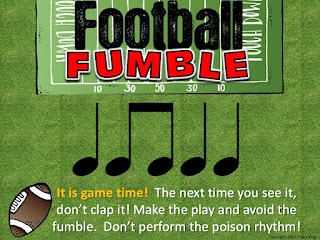
Pop tubes have made a fun addition to Poison Rhythm Games.  You can read more about how to play Poison Rhythm here: POISON RHYTHMS.  You can also purchase one or all of the ready to go games at my TeachersPayTeachers store The Bulletin Board Lady.

Use pop tubes in music class with these 5 easy ideas. elementary music education, pop toobs, fidget toys, music classroom, music manipulatives.


Assessment

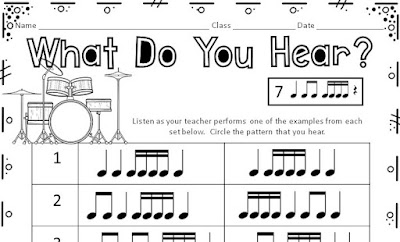
I use these What Do You Hear worksheets with my 3rd-5th graders.  The process is to perform the patterns, then listen as I play the pattern on a drum, cowbell or other percussion instruments.  Next, they circle the pattern they heard.  I add pop tubes to the first step.  Students read and perform the patterns on the pop tubes, then listen, then circle.  It really adds some fun to assessment. Click the picture to take a closer look at this set of worksheets.

Use pop tubes in music class with these 5 easy ideas. elementary music education, pop toobs, fidget toys, music classroom, music manipulatives.


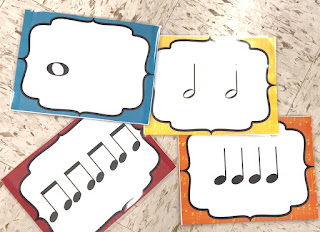
Four Rhythm Cards

I should really find a better name for these, but it is working for now.  You can download these cards for free and read about other ways to use them HERE.  Here's what I do with the cards and pop tubes:

After passing out the pop tubes, I choose a song with a medium to fast beat (which are much easier than slower songs) and start it while holding up one of the cards.  Students use the pop tubes to play the pattern as an ostinato until I change the card.  That's really it!  It is a fun way to use pop music in your classroom.  (See, what I did there?  POP music?  LOL). It also gets students excited about practicing rhythms and performing as an ensemble.

Use pop tubes in music class with these 5 easy ideas. elementary music education, pop toobs, fidget toys, music classroom, music manipulatives.


I store my pop tubes in a plastic shoebox container.  They are easy to clean.  You can have students expand them and then spray them with Lysol or they can go in a sink of hot, soapy water.  If you enjoyed these ideas, pin them for later.
Use pop tubes in music class with these 5 easy ideas. elementary music education, pop toobs, fidget toys, music classroom, music manipulatives.


post signature

5 Mistakes You're Making with Workstations

Are you struggling to make music workstations work for you.  Learn about 5 mistakes you may be making and their solutions for your music classroom.

Are your struggling to make workstations work for you?  You could be making some of these mistakes.  Don't worry!  I have some solutions that might work for you.

1.  Planning activities that are finished too soon.  An activity that is too simple means that students will finish right away and then start talking or causing problems.

SOLUTION:  Plan activities that can be repeated until it is time to move to a new station.  If they are completing a worksheet or exit ticket, give them instructions for what to do when they are finished.  For example, when my students finish a worksheet they can turn the paper over and draw a picture or write me a letter.  They love this!

2.  Making too many noisy centers. 
I want my students to have many opportunities to make music, not just learn about music so I have fallen victim to this.  Trust me, it is definitely a loud lesson to learn.

SOLUTION:  Now I like to plan noisy activities in a 1:2 ratio.  One noisy activity to two other quieter activities.  So on a normal workstation day I have 6 stations set up.  Two of those stations would include singing, playing an instrument, etc...

When you set up your stations put those louder stations as far away from each other as is reasonably possible.  I like to set up the stations in opposite corners so that the sound isn't all flowing to the center of the room raising the volume level of the whole room.

3.  Assessing each station.
If they are doing something, it should be assessable, right?  Maybe, but you don't have to take a grade on every single thing you do.  You will just stress yourself out and your students too.

SOLUTION: Plan experiences for your students.  Let them explore, create, arrange, improvise, talk about music, invent and discover.  You don't always have to assess.  When I plan to add an assessment to the rotation of workstations I use a worksheet or another written assignment OR I am a station and students rotate to me and we will do singing games, name games or games.

4.  Planning activities that students can't complete by themselves.
I think my students can do anything!  It turns out that sometimes they need me to keep an activity going, to help them stay on task or to constantly help them review.  As a teacher, it is what I do every day; however, when I plan workstations I need students to be able to work independently or with their small group to complete tasks.

SOLUTION:  When planning your workstations, be sure to think about the variety of learners that will use them.  It is likely that you will have IEP or 504 students that will need accommodations.  Can you record the directions so that students can listen to them?  Can you include materials that help students choose the correct answer?  What are things that you can do to make sure they are successful and independent?

For example, if you have students working on naming pitch names try including a "cheat sheet" that helps students remember those names.  Working on musical math and adding together notes and rests?  Try this sheet by Sara Bibee:  Note and Rest Duration Chart.  Plan ways for students to help themselves.

5.  Not having fun!
I'm not sure who loves workstations more, my students or me!  Workstations allow students time to explore to experience differentiated experiences and to talk about musical experiences with their classmates.

SOLUTIONS:  Consider adding a few more games to your workstations rotations.  If you would have fun completing the activity, so would your students.  Include stations that don't require a ton of setup time.   Check out this list of 99 Workstations You'll Love and be inspired.


Like these ideas?  Pin them for later!
Are you struggling to make music workstations work for you.  Learn about 5 mistakes you may be making and their solutions for your music classroom.

post signature

Create a Music Workstation with an Ornament Organizer

Learn how to create a variety of music workstations using a plastic Christmas ornament organizer that you can use all year round.  Students can practice identifying music symbols, instrument families, note values and more by gently bouncing a ball or by organizing ornaments!  Fun!  This DIY music room project will impress your music students.

I am a teacher hoarder.  It is true.  I confess.  Sometimes I buy things because I can imagine a workstation or classroom activity that I'll create with it.  Sometimes I buy things because I am inspired, but haven't quite figured out how to use it yet.   Crazy, right?  This is one of those things that I purchased because I was really inspired and had several ideas right away.  I hope that you'll enjoy using it in your classroom too.

So what was this inspiring thing that I found and purchased right away?  A plastic ornament organizer.  I purchased  one at Walmart and immediately knew that it would be awesome for composing.  It had four rows of four wells.  That sounds like a 16 measure or 16 beat (4 measures) composition to me!

COMPOSING
To create this activity, I purchased some inexpensive ornaments.  I chose the least breakable kind that I could find.  You could also use plastic Easter eggs, ping pong balls, plastic pumpkins, jack-o-lanterns or even flashcards to make it seasonal for other times of the year.  I use this as a workstation. Here's what we do:

Students randomly pull out an ornament and place it anywhere in the container, rhythm side up.  (Some ornaments have 2 sides.  One side is more complex than the other.). Then the group claps the rhythm.  Students continue taking turns until all of the wells have an ornament in them.  Then they clap the entire composition.  If there is time left during their workstation rotation, they can do it again.

With some grade levels, I have them copy their composition down onto paper and turn in.  Other times, they notate it on a 16 box grid using lap packs.  Learn more about lap packs and download a freebie in THIS blog post.

I think this would be a fun center to use to decipher the rhythm of a familiar song.  For the holidays, "Jingle Bells" would be easy.  When creating the rhythms on the ornaments you would need to make sure that you had enough of the required rhythms to make this activity work.


Learn how to create a variety of music workstations using a plastic Christmas ornament organizer that you can use all year round.  Students can practice identifying music symbols, instrument families, note values and more by gently bouncing a ball or by organizing ornaments!  Fun!  This DIY music room project will impress your music students.Learn how to create a variety of music workstations using a plastic Christmas ornament organizer that you can use all year round.  Students can practice identifying music symbols, instrument families, note values and more by gently bouncing a ball or by organizing ornaments!  Fun!  This DIY music room project will impress your music students.

Learn how to create a variety of music workstations using a plastic Christmas ornament organizer that you can use all year round.  Students can practice identifying music symbols, instrument families, note values and more by gently bouncing a ball or by organizing ornaments!  Fun!  This DIY music room project will impress your music students.


MATCHING
Using a 20 well ornament organizer and a new set of ornaments, I created a matching game with music symbols and notes.  I drew the symbol on a small pieces of masking tape and stuck them on the wells.  On the ornaments I wrote the name of the symbol.

Students pull an ornament out of a gift bag and match the name on the ornament with a place in the ornament organizer.  Then they check themselves using a display that I have set up in my room.  You can check out some of the sets HERE.

This would be fun to do with tempo and dynamics terms.  Write the word on the piece of tape or sticker and write the definition on the ornament.

BOUNCE THE RHYTHM
Learn how to create a variety of music workstations using a plastic Christmas ornament organizer that you can use all year round.  Students can practice identifying music symbols, instrument families, note values and more by gently bouncing a ball or by organizing ornaments!  Fun!  This DIY music room project will impress your music students.This by far my students' favorite way to use the ornament organizer.  In the bottom of each well in the container, I write a number.  I used 1, 2, 3, 4 and 1/2.  Then I drew each of these notes on a piece of duct tape and placed one each on a tennis ball:  quarter note, half note, dotted half note, whole note and eighth note.

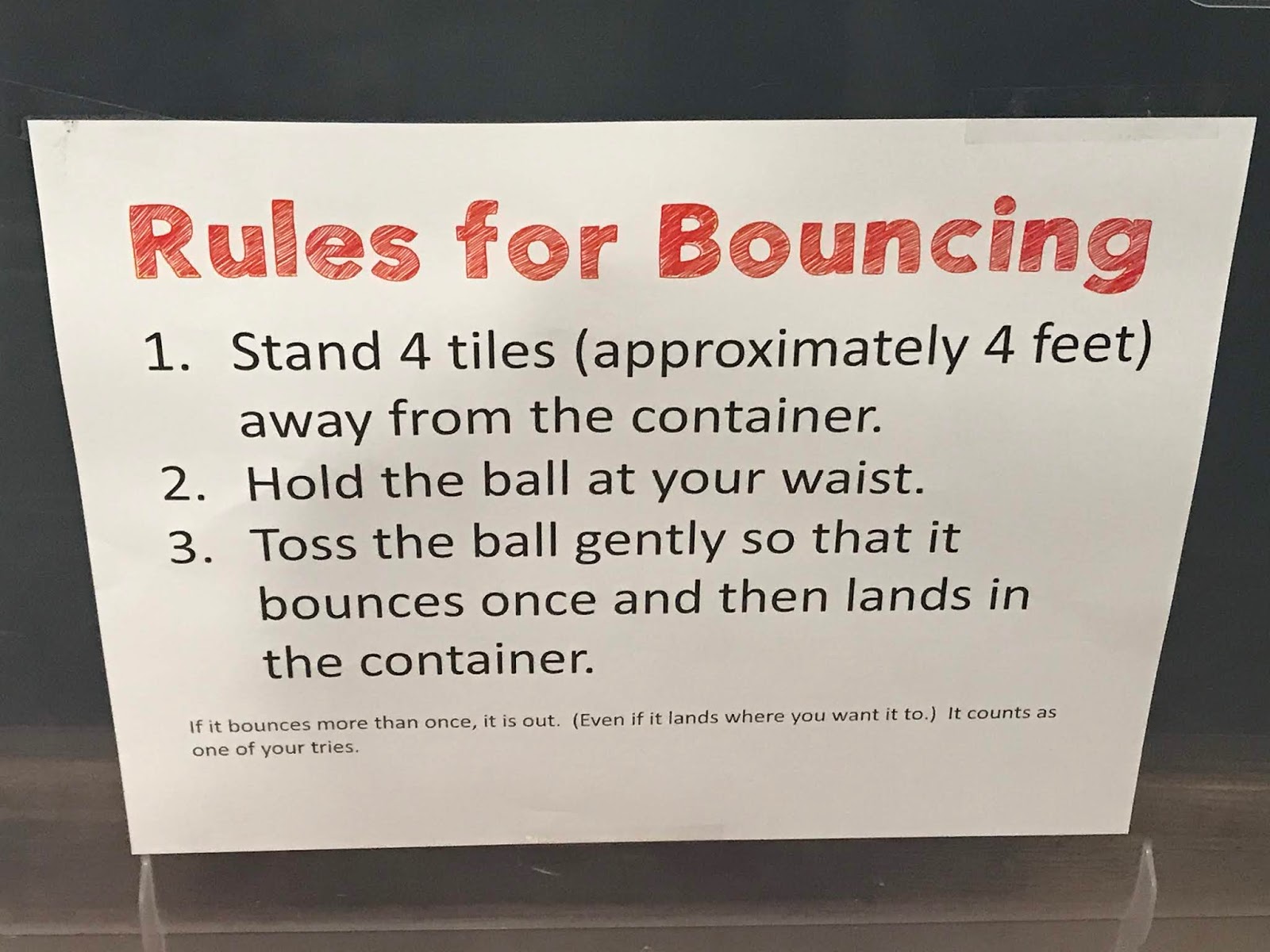
To play, students stand four feet away from the container.  In my classroom this is four floor tiles from the container so it is easy for them to measure.  You could also put a tape line down if you need to.  I rest the container against a wall to provide a bit of stability and keep the balls from flying past the container.

Students hold their hand at their waist and gently bounce the ball so that it lands in the container.  They aim for the number that matches the number of beats of the note on each ball.  FUN!

This would be fun to do with instruments and their families.  Use 20-25 different balls and write the instrument name on them.  Label the container with the instrument families.
Learn how to create a variety of music workstations using a plastic Christmas ornament organizer that you can use all year round.  Students can practice identifying music symbols, instrument families, note values and more by gently bouncing a ball or by organizing ornaments!  Fun!  This DIY music room project will impress your music students.

I spoke to my PE teacher about how to make this activity as successful as possible.  She stressed keeping the ball waist high and suggested using a low bounce tennis ball (available at most places that sell them).  Ping pong balls or Nerf balls might make great options too.

I hope that your students enjoy this activity.  Look ornament holders during the Christmas season and the first part of January.  If you liked this idea, PIN it for later!

Learn how to create a variety of music workstations using a plastic Christmas ornament organizer that you can use all year round.  Students can practice identifying music symbols, instrument families, note values and more by gently bouncing a ball or by organizing ornaments!  Fun!  This DIY music room project will impress your music students.


post signature

99 Music Workstations You are Going to Love


A HUGE list of Music Workstations for the elementary music classroom.  You are going to love these center ideas for pitch, rhythm, singing, composing, playing instruments and more.

I love using workstations in my classroom.  I wanted to share a list of some of my favorites, but I think I got a little carried away.  Here are almost 100 workstations that I love with links and explanations.  Enjoy!

Coloring

Color by Note  These activities are fun for students an allow them to show what they know by coloring their answers.  Some of these activities may take more than 10 minutes.
Writing Prompts   Perfect for workstations!  Students write an answer, a paragraph or a story based on the prompts.  Use regular paper or Chrome books and Google Classroom!
Composer Coloring Sheets  Although I often use these while listening to music, they work great in a workstation.  Even the big kids enjoy this!
Primary Writing Prompts   Younger students that may be pre-readers, need to be able to express their ideas with words and pictures.  These primary writing prompts provide space for both.
My Book of Mary Poppins. As a review after we have watched the movie (or portions of it), we color these books that highlight some key items in the movie.
Instrument Coloring Sheet This is probably pretty obvious.  Coloring sheets for instruments or for groups of instruments in their families are great for workstations.
Music Memory Book This is best when used at the end of the school year.  I usually have students work on the books for about half of a class period.  Next class, they finish them as one of the stations that I have set up.
Roll and Cover worksheets  Easy peasy.  Print and set in a workstation with some crayons and some dice.  Actually I use one BIG die and the group shares.  Fun!


Composing

I find that it is really difficult to complete a composing project in the small amount of time that students have in a workstation.  So, instead of doing an entire project, these centers allow students to compose by arranging.  Take a closer look:


Dynamics and Tempo

Candy Corn -Dynamics  This seasonal workstation is simple to do.  Students complete a candy corn puzzle that contains a dynamic term, symbol and definition.  Then, they copy that information to a chart.
A Dab of Music Learning - Dynamics and Symbols  I love dabbers and so do my students!  The set focuses on dynamics and music symbols.  I usually plan 2-3 worksheets for one center.
Dynamics Punch Cards  I have quite a few hand held hole punchers and they come in handy for this station!  Take a closer look by clicking on the link.


Instrument Families

A Dab of Music Learning- Instruments   Another dabber activity set.  This set focuses on instrument families and provides many opportunities for students to show what they know.
Instrument Matching Game  Use pictures of instruments or print this set to use to have students match pictures of instruments with the names of instruments.
Mystery Instruments  One of my favorite activities. I tell students to be sneaky detectives and not tell any other groups what instrument they think is the mystery instrument.  They fill out a "case file" that records the clues they discover. At the one of the center rotations I open the bag and show the class.  Using a different instrument, you could do this many times.
Clip It-Instruments Edition   Just add clothespins to these cards for an engaging workstation that reinforces instrument names and simple rhythm patterns.
Read It, Trace It, Stamp It  This station requires some letter stamps and an ink pad.  Get the washable kind of ink pads.  Trust me.
Dip Tray Family Sort  Using an inexpensive dip tray from the dollar store, this station is a breeze to set up.  Read more about it.
Instrument Coloring Sheets  Use these to reinforce your unit on instrument families.
Instrument Family Punch Cards  Which of these instruments is in the brass family?  Punch your answers with a hole puncher.  Fun assessment.
My Book of Instruments  These take a little bit of time to copy and assemble but are great for small group work or workstations.  Do one family at a time or all instruments at the same time.
Instrument Investigations  This activity takes 15- 20 minutes so you may need to plan a day of longer workstations to make this go well.
Misspelled Instrument Punch Cards  I think it is important that students learn to spell instrument names correctly.  I don't always feel like I have enough time during instruction, so I love adding these punch cards to a workstation rotation.


Movement

Yes!  You can do a movement center!  Set clear expectations and add music (or not) and these activities work so great in stations.  Student love them too.


Non-Pitch Percussion Instruments

Playing instruments is one of my students' favorite workstations and I understand why!  These station sets make playing instruments a pleasant and organized experience.  No, really.d


Pitch

A Dab of Music Learning - Intervals  These dabber activities are great for upper grades.
A Dab of Music Learning -Pitches   Drilling pitch names doesn't have to be boring.  These dabber activities are designed to be completed quickly.  That makes them perfect for workstations.  
Treble Clef Twister  There are many ways to do this, but essentially it requires a staff on the floor.  This could be one that you create with tape, one you already have on a rug or one that you draw on a plain shower curtain.  The link will take you to a sheet that I use as a spinner.
Musical Mneumonics  Another way to drill those pitch names is to have students create their own musical mnemonics.  
Bottle Cap Staff   I have collected hundreds of bottle caps from 2-liters of soda, water bottles, etc...  They make perfect note heads.  Take a closer look to see how it could work in a center.
Bottle Cap Pitch Sort  I also took some of those bottle caps and modge-podged some staves and notes on them.  Students sort them into piles based on their letter name.
Flashcards  - Yeah.  They are boring, but neccessary.  It seems that kids hardly ever use them anymore so maybe they will find them to be a novelty.
Worksheets   I know.  It sounds boring, but these worksheets are attractive and easily completed in the time that students have in a workstation.
Swat the Staff  Create a staff on the wall with tape.  Two students stand next to it, another calls out a letter from the musical alphabet.  The first one to swat the correct line or space wins!
Pitch Match Ups  Basically flashcards, but you match words spelled out by notes on the staff to the words.  Lots of fun designs.
Bop It/Simon Says  Melodic retention.  :-)


Reading

I almost always use my reading area as a stop in the workstation rotation.  Here are some links that might help you out with your reading area.
Classroom Library  Need some ideas for your reading area?  Check out this huge list!
Books for Primary Classes  This is a great list of books that your primary classes will love.
Men and Women of Jazz  Print and laminate the pieces of this bulletin board and include them at a workstation.  They contain short passages and students have time to read more than one during their center rotation.
Meet the Composers  Similar to the Men and Women of Jazz, this bulletin board set can become a reading station too.
Magazines - Do you subscribe to Music Alive or Music Express?  Leave a few copies in a crate and set it in the floor.  Instant workstation!


Rhythm

A Dab of Music Learning - Rhythm  Dab.  Dab. Dab dab dab.  Note values, musical math and more in this set.
Drawing Notes-lap packs  This link takes you to a blog post about Lap Packs.  I've used them with Kindergarten through high school.  For the littles, it is a great way to practice drawing notes.
Swat the Rhythm  We like swatting things in my classroom.  The link takes you to a few sets that I have created.  You can do the same activity with flashcards.  Lay them on the floor.  One student claps a rhythm that is on one of the cards.  The first student to swat the right answer, wins a point.  
Rhythm Blocks  Duplos and legos make great music workstations!  Check out this blog post to learn more.
Craft Stick Rhythms - Take craft sticks and use them to make quarter notes and barred eighth notes.  Students clap their "compositions" and then make more.
Roll and Cover  Roll and cover activities allow students to reinforce their knowledge of note names.
Musical Yahtzee  From Layton Music, this activity is great for small groups or workstations.  I laminate the score sheets when using them in workstations and add some music dice.  
Noodle Notes. I love pool noodles!  Learn about how to create noodle notes in this blog post.
Caterpillar Rhythms   Construction paper circles or paper plates become caterpillar bodies in this activity.  Add rhythm patterns or single notes on them and students build a caterpillar pattern.  The longer, the better!
Play Dough Mats  Laminate and just add play dough.  Students learn about notes and symbols through play.
Don't Break the Ice -take a Don't Break the Ice game and draw different notes on each block (quarter, half, barred eighths, 4 16ths, etc....).  Create a spinner with whatever note values you used.  Students spin and the tap out one block with that note on it until somebody breaks the ice.
Add it Up Rhythm Cards  Musical math!  This freebie can be used in many ways.
Note Value Punch Cards  This is another activity for hole punchers that can assess student knowledge.
Rap It Clap It Music Match It  This is an old faithful workstation for me.  Students match the syllables of themed words to simple rhythm patterns.  Perfect for a workstation.  I often do this activity with the whole group and use it in a workstation later.
Clip It Games  Clip it games require students to match words with a rhythm pattern that most closely matches its
Rhythm Pins w/Paint Chips  Cut the paint chips so that there are 4 boxes on them.  Draw single beat notes or rhythms on clothespins.  Students pin a measure on the paint chips, clap and repeat.
Candy Land (note differentiating)  Instead of using Candy Land for just color recognition, add music symbols, notes, pitches, etc... to the colors.  Fun!
Musical Jenga - Check out this awesome idea from the Music K-8 Idea Bank for creating a musical Jenga game.
Tracing Sheets  Get acquainted with notes and their values with these tracing sheets.  Great for younger learners.
Music Math Houses   I laminate these and use dry erase markers.  Students add up all of the musical math problems in colorful houses and check their own answers.
Note Knacks. These are great!  I have one student create a four beat measure and the others recreate it with the Note Knacks.  They are a little pricey, but worth it.
Dot Composing  This is a simplified way to compose using quarter notes, barred eighths or 4 16th notes.  Read more about it in this blog post.
Rhythm Blocks  Kelly Parrish from Rhythmically Yours makes these amazing rhythm blocks.  I use them for rhythmic dictation.  At a workstation, one student secretly creates a rhythm pattern and then claps it for their group.  The other students recreate that with their rhythm blocks.
Poison Rhythms. Using a lap top or table, I have students play poison rhythm just they way we do as a whole group.  FUN!  The link will take you to several different versions.


Vocal Stations

Vocal Explorations  -Vocalizations are a few workstation and let students be a little silly and creative.
Puppets and Books  Use puppets and some Wee Sing books at a station.  The goal?  SING!
Sticky Note Singing   Take a song that you are working to have memorized.  Cover part of it with a sticky note and try singing it.  Add another and try again.  Let your neighbor add the next one and try again.  It is a fun way to work on memorization and to get students singing at their center.
ABC Chart   This one is easy peasy to create.  Check out the blog post for a simple description of this activity.
Singing Sticks from Music Mom  These little singing sticks are great tools to reinforce Solfege or at my school to reinforce the pitch numbers of a major scale.  After using them with classes for a while, they can easily practice in workstation groups to sing patterns.
Singing Rocks   I love my singing rocks!  They really allow for improvisation and creativity.  After I have modeled this activity in class, students are able to do it in a workstation.  It is great to listen to them sing their imaginations out!
Blob Chorus - Ear Training  This is an app that is so fun that students don't realize they are learning!  Hurray!

STEAM

Xyloba   Engineer a marble run that plays a song with this awesome set!
Found Sounds  Collect some junk.  Put it in a box.  Let students become detectives, inventors and musicians.
Stikbot Animation  Animate a dance.  Choreography and green screen technology can create some amazing videos.
Spec Drums  There are so many ways to use Spec Drums in workstations:  exploration, composition, practicing simple folk songs and more!
Ozobots   Code these little robots to show the tempo changes of a piece of music.  Use the workstation time to have them practice creating paths that change speeds (or tempos!).
Makey Makey   My students always fight to be the first group at this station.  I add the instructions, a Makey Makey invention set and some random things for students to experiment with like fruit, play dough, hot dogs...whatever.  Students use these items to play a keyboard or drum on the computer.  I definitely recommend this activity!


Apps

There are SO many great music apps out there.  Here are a few that I think work really well in workstations.


Miscellaneous

Music Interest Inventory Punch Cards   This is a fun addition to workstation rotations at the beginning of the school year.  You can learn a great deal about your students.
Talk About Tunes   I mean, they are going to talk anyway.  Why not make it musical?
Carnival of the Animals  -Use a day of workstations to review Carnival of the Animals.
Peter and the Wolf - This set lets you expand your Peter and the Wolf unit in some fun and creative ways.
Star Spangled Banner   I use this every singing year with 3rd or 4th grade.  It is a great way to learn more about our national anthem, help students memorize it, learn the vocabulary and more.  I always plan a couple of class periods to do all of the stations in this kit.


Whew!  What a list!  If you loved these ideas, PIN THIS for later!
A HUGE list of Music Workstations for the elementary music classroom.  You are going to love these center ideas for pitch, rhythm, singing, composing, playing instruments and more.


 post signature

Erasers as Music Manipulatives

Mini erasers can be a valuable manipulative in the music classroom.  Use them for rhythm activities, pitch work and workstations.  Learn more and start collecting!

My 5 year old daughter is a collector.  Okay, she is probably a future hoarder.  She loves putting things in her "collections" and one of those treasures is erasers.  She loves those colorful, unique erasers not so much for erasing but for pretend play, counting and more.  This gave me a great idea for music class!
Mini erasers can be a valuable manipulative in the music classroom.  Use them for rhythm activities, pitch work and workstations.  Learn more and start collecting!
I decided to use the 16 block grid as a means for students to create and organize rhythm patterns based on the erasers.  I talk a little bit more about the grid and the lap packs they are used with in THIS blog post.

Mini erasers can be a valuable manipulative in the music classroom.  Use them for rhythm activities, pitch work and workstations.  Learn more and start collecting!
At this workstation, students choose an erase and put it in a square.  Then, students decide what to call the eraser.  They can be creative with this part (and often are!).  When they decide what to call the eraser they write the name under it.  In this picture they actually put it in the second row, but usually we put it in the same box as the eraser.

Mini erasers can be a valuable manipulative in the music classroom.  Use them for rhythm activities, pitch work and workstations.  Learn more and start collecting!
Students can be creative in naming the erasers depending on the rhythms they know or want to use.  For example watermelon could be called "fruit".  Pizza could be "slice" or "piece of pizza" or "veggie pizza".  This works are a means of differentiation.  Students can make this as difficult or as easy as they like.

After they have created the rhythms, they share them with their group.  I use this activity as part of a workstation rotation so there are 3-5 kids in a group.  Students can then choose body percussion or a small percussion instrument to perform their rhythm as an ostinato in their group.

This would also work as a whole group activity.  You could write the rhythms on the board or use a document camera, erasers and grids to replicate student compositions.  Then you could create ostinatos using percussion instruments, Orff instruments or body percussion to create a really fantastic piece.


Mini erasers can be a valuable manipulative in the music classroom.  Use them for rhythm activities, pitch work and workstations.  Learn more and start collecting!
I've found erasers in many different stores:  Target (Dollar Spot), Office Max, Five Below, Dollar Tree and more.  I'm storing them in a box that was designed for beads right now, but I think that I might try this organizer (from Michael's) as my collection grows. (Pictured below.)
Mini erasers can be a valuable manipulative in the music classroom.  Use them for rhythm activities, pitch work and workstations.  Learn more and start collecting!
 In addition to using the erasers for rhythm practice you could also use them with a staff and do melodic dictation using the erasers as note heads.  This would be particularly fun if you had erasers to match the theme of a song.  For example, fish while listening to "Aquarium" from Carnival of the Animals or Jack-o-lanterns while listening to "Night on Bald Mountain would be fun to create an activity around.

I hope that you have been inspired to try mini erasers in your classroom.  I also hope that I haven't created an addiction for you!  I have already started collecting erasers for Halloween, Christmas and Easter!

Like these ideas?  PIN THEM for later!
Mini erasers can be a valuable manipulative in the music classroom.  Use them for rhythm activities, pitch work and workstations.  Learn more and start collecting!


post signature